
DWI Settlement Program
El Futuro offers the following services in Spanish:
- Substance Abuse Evaluations (Alcohol Evaluations, Driving Under the Influence or DWI Evaluations, Court Ordered Evaluations)
- Evening Substance Abuse Treatment Group:
- Monday, Tuesday, Wednesday, and Friday from 6-8pm by video call, you can only take two classes a week
- Treatment reviews outside of the state of North Carolina (Out of State Review). When you live in another state, but receive a DWI in the state of North Carolina, you can contact us and we will guide you to resolve your case.
*The evaluations are in English and Spanish, the group treatment will only be in Spanish.
Cost:
- Assessments $100 ($12.75 additional if you need help with your driving record)
- Treatment $25 per hour
- Out-of-state reviews $150
- Driving history $12.75
*We accept cash, credit or debit card
What is a Substance Abuse Assessment or a DWI?
When you are pulled over for driving under the influence of alcohol or drugs, or for having an uncovered container of alcoholic beverages in your car, or for consuming alcohol while under the age of 21, the state of North Carolina will require you to take a Driver Assessment. Substance Abuse to determine if you have a problem with the use of alcohol or drugs.
During this evaluation, you will be interviewed by a Professional Substance Use Counselor. At the end of the evaluation, the counselor will recommend the education or level of treatment that he deems appropriate for you.
What do I need for my evaluation?
A copy of the breath or blood alcohol concentration given to you by the officer.
Complete and recent driving record (within the last 6 months, does not need to be certified). You can apply online here if you have a social security number, your North Carolina driver’s license number.
Assessments $100 ($12.75 additional if you need help with your driving record)
Class schedule (Group Treatment)
Group Treatment (or alcohol classes) are Monday, Tuesday, Wednesday and Friday afternoons from 6:00-8:00 PM
Please call to schedule your appointment at 919-688-7101
FAQ
Is my evaluation in person or by video call?
At this time we are only offering evaluations by video call. We will contact you to set up the Zoom app that you will use to connect with the counselor for your call.
How long will my evaluation last?
The evaluation will last a total of an hour and a half. At the end of the evaluation the counselor will make a recommendation of the number of hours you need to receive treatment and we will send a receipt to your lawyer (if you have given us prior authorization).
Can you share my information with my lawyer?
We need your written authorization to share the results of your evaluation and treatment with your attorney, probation officer, or any other person and organization.
How much do I have to pay for my evaluation?
The cost is $100 for your evaluation and $10.75 for your recent driving record (if you want us to request it). There may be an additional cost for processing the driving record.
How much do I have to pay for my treatment?
The cost of your treatment depends on your specific situation. The counselor will tell you the number of hours of treatment or education, at the end of your evaluation. You can decide if you want to do the treatment with us or prefer to go to another organization.
How soon will I finish my treatment?
The time depends on how often you attend the group sessions. For example, if they recommend short-term treatment of 20 hours, the minimum is 30 days.
 Alvely Alcántara, LCSW
 Rossy C. Garcia, MEd
  Katy Sims, MD
  Everardo Aviles, LCSW, LCAS (Eve)
 As a medical anthropologist and social work researcher, Dr. Gulbas’ research embodies interdisciplinarity through the integration of applied theories of health and human development with qualitative and ethnographic methodologies. Her work seeks to understand how people—children, families, and providers—navigate complex sociocultural landscapes in the pursuit of mental health. Most of her work, to date, focuses attention on developing more robust interpretations of suicide risk. With funding from the National Institutes of Mental Health, this body of research has contributed to advancements in theoretical and empirical knowledge of the broader contexts within which youth suicide risk is situated.
  R. Gabriela Barajas-Gonzalez is a developmental psychologist and an assistant professor of Population Health at NYU Grossman School of Medicine. Dr. Barajas-Gonzalez is the principal investigator of a study that examines the impact of immigration-related threat and stress on school communities. She earned a PhD in developmental psychology from Columbia University and hold a BA in human biology from Stanford University. Dr. Barajas-Gonzalez is the daughter of Mexican immigrants and a first gen college student.
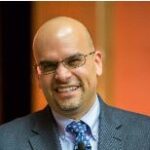 Dr. Parra-Cardona is an Associate Professor in the Steve Hicks School of Social Work (SHSSW) at the University of Texas at Austin. At the SHSSW, he serves as Coordinator for Mexico and Latin American initiatives. He also serves as Area Director for Research at the UT Austin Latino Research Institute. Dr. Parra-Cardona’s program of research is focused on the cultural adaptation of evidence-based parenting interventions for low-income Latinx populations in the US and Latin America.
 Bianka Reese, PhD, MSPH is a research scientist and program evaluator specializing in adolescent and young adult sexual and reproductive health. Her previous research in the experiences of Latinx LGBTQ+ youth stems from her work as the Research and Evaluation Manager at SHIFT NC (Sexual Initiatives For Teens), where she led largescale evaluations of multilevel, community-based sexual health promotion initiatives and research projects aimed at elevating the voices of diverse youth in North Carolina. Dr. Reese is currently the Senior Research Strategist at Creative Research Solutions, LLC, an award-winning national evaluation, research, and assessment firm.
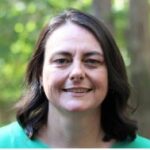 Tania Connaughton-Espino, MPH is an independent researcher focused on adolescent and young adult sexual and reproductive health. Her interest in the experiences of Latinx LGBTQ+ youth stems from her previous work with SHIFT NC (Sexual Initiatives For Teens), where she led the training and evaluation department, conducted capacity-building workshops for youth serving professionals including on the topic of how to be more affirming of LGBTQ youth, and from her extensive experience working with the Latinx population in NC.
 Maru Gonzalez, EdD is an Assistant Professor and Youth Development Specialist in the Department of Agricultural and Human Sciences at North Carolina State University. Her areas of inquiry include youth development with a focus on activism, social justice, and the experiences of LGBTQ+ young people across familial, school, and community contexts.
  Nayeli Y. Chavez-Dueñas, PhD
 Hector Y. Adames, PsyD