
 After three years of statewide collaboration, El Futuro is proud to share the 2023–2026 Impact Report for the Immigrant Mental Health Solidarity Network (IMHSN), documenting the Network’s accomplishments and the collective efforts that helped strengthen support for immigrant mental health across North Carolina.
Launched in 2023 with support from the Kate B. Reynolds Charitable Trust and the Blue Cross and Blue Shield of North Carolina Foundation, the IMHSN brought together community organizations, healthcare providers, educators, researchers, advocates, policymakers, and individuals with lived experience to build stronger partnerships, elevate immigrant voices, and advance culturally responsive mental health systems throughout the state.
Over the course of the initiative, the Network grew to include more than 50 organizations representing 58 North Carolina counties. Members participated in quarterly meetings, two statewide convenings, collaborative trainings, and healing-centered gatherings that fostered shared learning, stronger relationships, and coordinated action.
One of the Network’s most significant accomplishments was the development of the Immigrant Mental Health in North Carolina Landscape Analysis, the first statewide report focused specifically on the mental health experiences, strengths, barriers, and opportunities affecting immigrant communities. Developed in partnership with the North Carolina Institute of Medicine, the report established a shared evidence base that has informed organizations, funders, and policymakers across the state.
Building on those findings, Network members developed two policy recommendations focused on expanding linguistic access to behavioral health care and strengthening sustainable funding for community-based mental health programs. Together, these resources provide practical guidance for improving access to culturally responsive mental health services in North Carolina.
The Impact Report also reflects on the broader impact of the Network. During a period marked by heightened fear, misinformation, immigration enforcement, and persistent barriers to care, the IMHSN became a trusted space where organizations could connect, learn from one another, and work collectively toward more coordinated support for immigrant communities.
With the successful completion of the Network’s founding phase ,stewardship of the Immigrant Mental Health Solidarity Network has transitioned to NC Counts Coalition, following a collaborative selection process designed to ensure the Network’s long-term sustainability and continued statewide leadership.
El Futuro is deeply grateful to the community members, partner organizations, advisors, funders, and leaders whose expertise, lived experience, and commitment shaped the Network over the past three years. This report serves as a record of what was accomplished together and as a resource for those working to advance equitable, culturally responsive mental health care for immigrant communities across North Carolina.
We invite you to explore the Impact Report and the resources developed through the Immigrant Mental Health Solidarity Network.
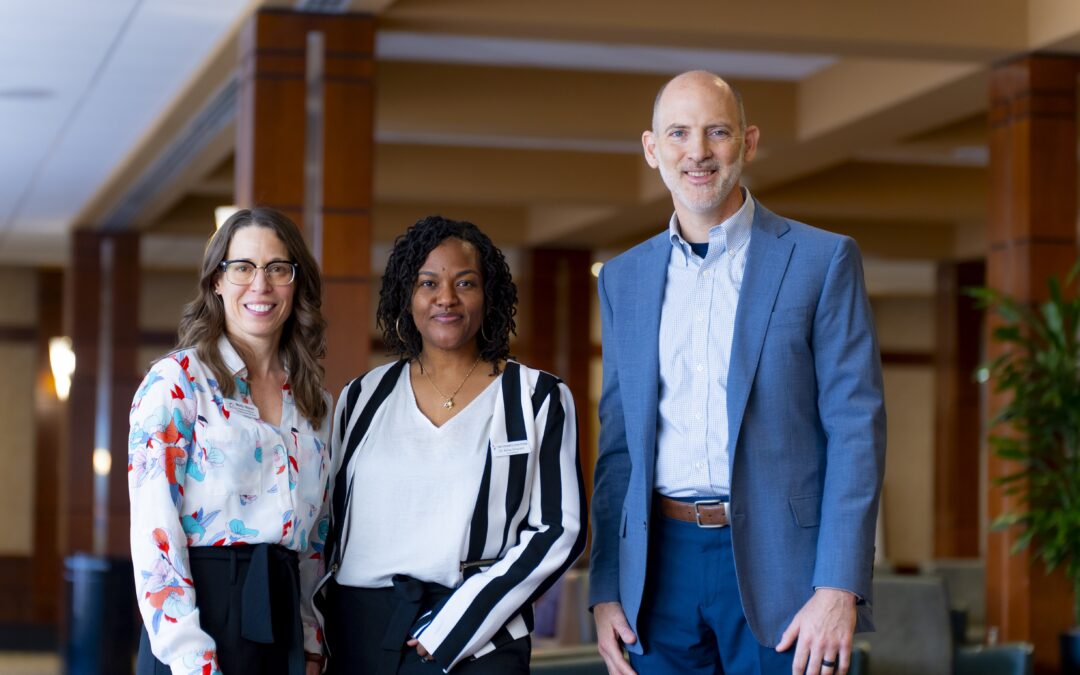
*In the photo, from left to right: Molly Hayes, El Futuro, Allisa Sheppard, NC Counts Coalition, Luke Smith, El Futuro
 Alvely Alcántara, LCSW
 Rossy C. Garcia, MEd
  Katy Sims, MD
  Everardo Aviles, LCSW, LCAS (Eve)
 As a medical anthropologist and social work researcher, Dr. Gulbas’ research embodies interdisciplinarity through the integration of applied theories of health and human development with qualitative and ethnographic methodologies. Her work seeks to understand how people—children, families, and providers—navigate complex sociocultural landscapes in the pursuit of mental health. Most of her work, to date, focuses attention on developing more robust interpretations of suicide risk. With funding from the National Institutes of Mental Health, this body of research has contributed to advancements in theoretical and empirical knowledge of the broader contexts within which youth suicide risk is situated.
  R. Gabriela Barajas-Gonzalez is a developmental psychologist and an assistant professor of Population Health at NYU Grossman School of Medicine. Dr. Barajas-Gonzalez is the principal investigator of a study that examines the impact of immigration-related threat and stress on school communities. She earned a PhD in developmental psychology from Columbia University and hold a BA in human biology from Stanford University. Dr. Barajas-Gonzalez is the daughter of Mexican immigrants and a first gen college student.
 Dr. Parra-Cardona is an Associate Professor in the Steve Hicks School of Social Work (SHSSW) at the University of Texas at Austin. At the SHSSW, he serves as Coordinator for Mexico and Latin American initiatives. He also serves as Area Director for Research at the UT Austin Latino Research Institute. Dr. Parra-Cardona’s program of research is focused on the cultural adaptation of evidence-based parenting interventions for low-income Latinx populations in the US and Latin America.
 Bianka Reese, PhD, MSPH is a research scientist and program evaluator specializing in adolescent and young adult sexual and reproductive health. Her previous research in the experiences of Latinx LGBTQ+ youth stems from her work as the Research and Evaluation Manager at SHIFT NC (Sexual Initiatives For Teens), where she led largescale evaluations of multilevel, community-based sexual health promotion initiatives and research projects aimed at elevating the voices of diverse youth in North Carolina. Dr. Reese is currently the Senior Research Strategist at Creative Research Solutions, LLC, an award-winning national evaluation, research, and assessment firm.
 Tania Connaughton-Espino, MPH is an independent researcher focused on adolescent and young adult sexual and reproductive health. Her interest in the experiences of Latinx LGBTQ+ youth stems from her previous work with SHIFT NC (Sexual Initiatives For Teens), where she led the training and evaluation department, conducted capacity-building workshops for youth serving professionals including on the topic of how to be more affirming of LGBTQ youth, and from her extensive experience working with the Latinx population in NC.
 Maru Gonzalez, EdD is an Assistant Professor and Youth Development Specialist in the Department of Agricultural and Human Sciences at North Carolina State University. Her areas of inquiry include youth development with a focus on activism, social justice, and the experiences of LGBTQ+ young people across familial, school, and community contexts.
  Nayeli Y. Chavez-Dueñas, PhD
 Hector Y. Adames, PsyD