
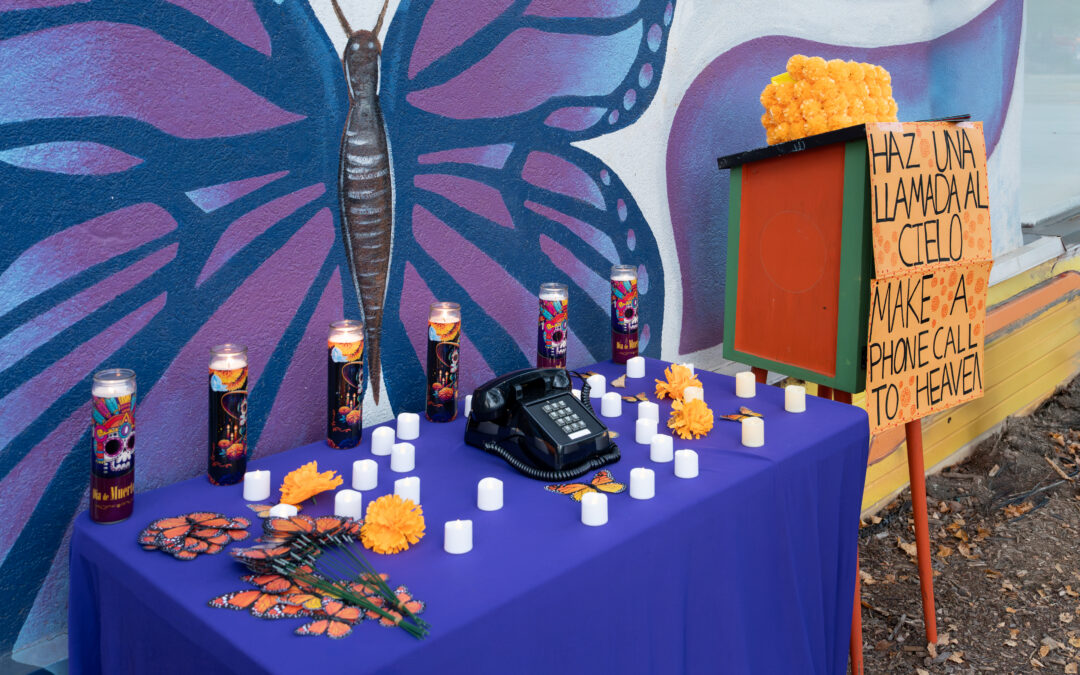
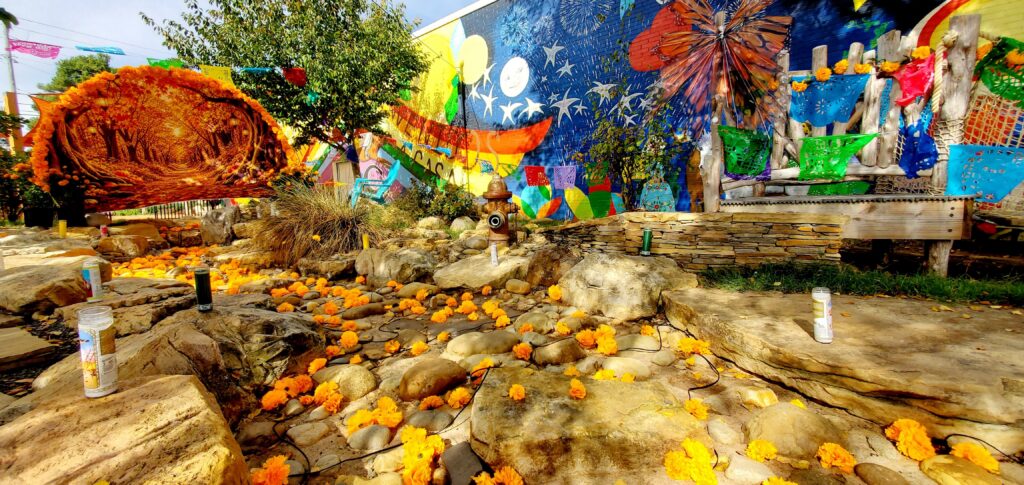
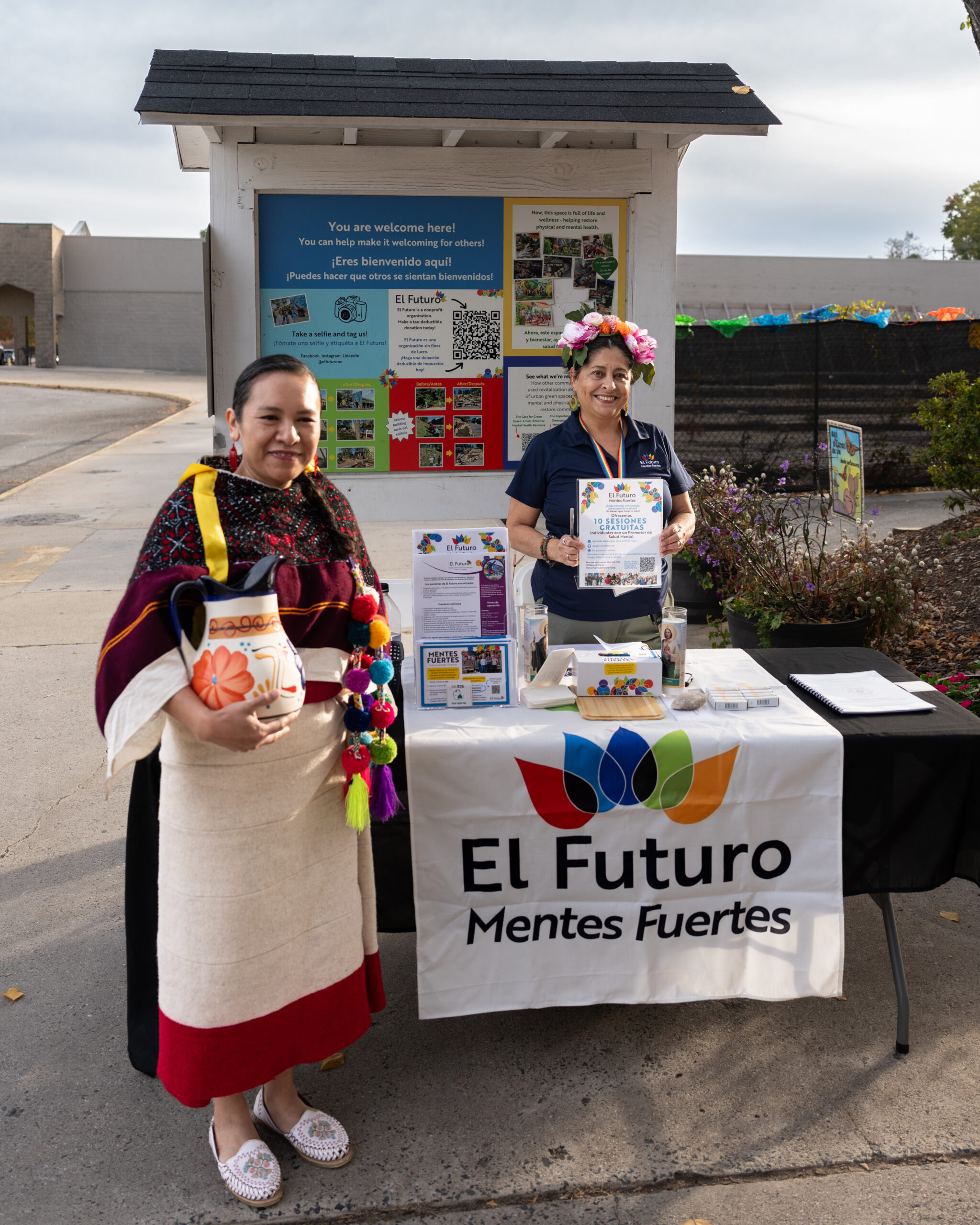
 Although El Futuro’s Día de los Muertos celebration was scheduled to begin at 4 p.m., the joy started much earlier that morning. By 8 a.m., volunteers were already arriving, ready to give their time and energy to create something meaningful for our community.
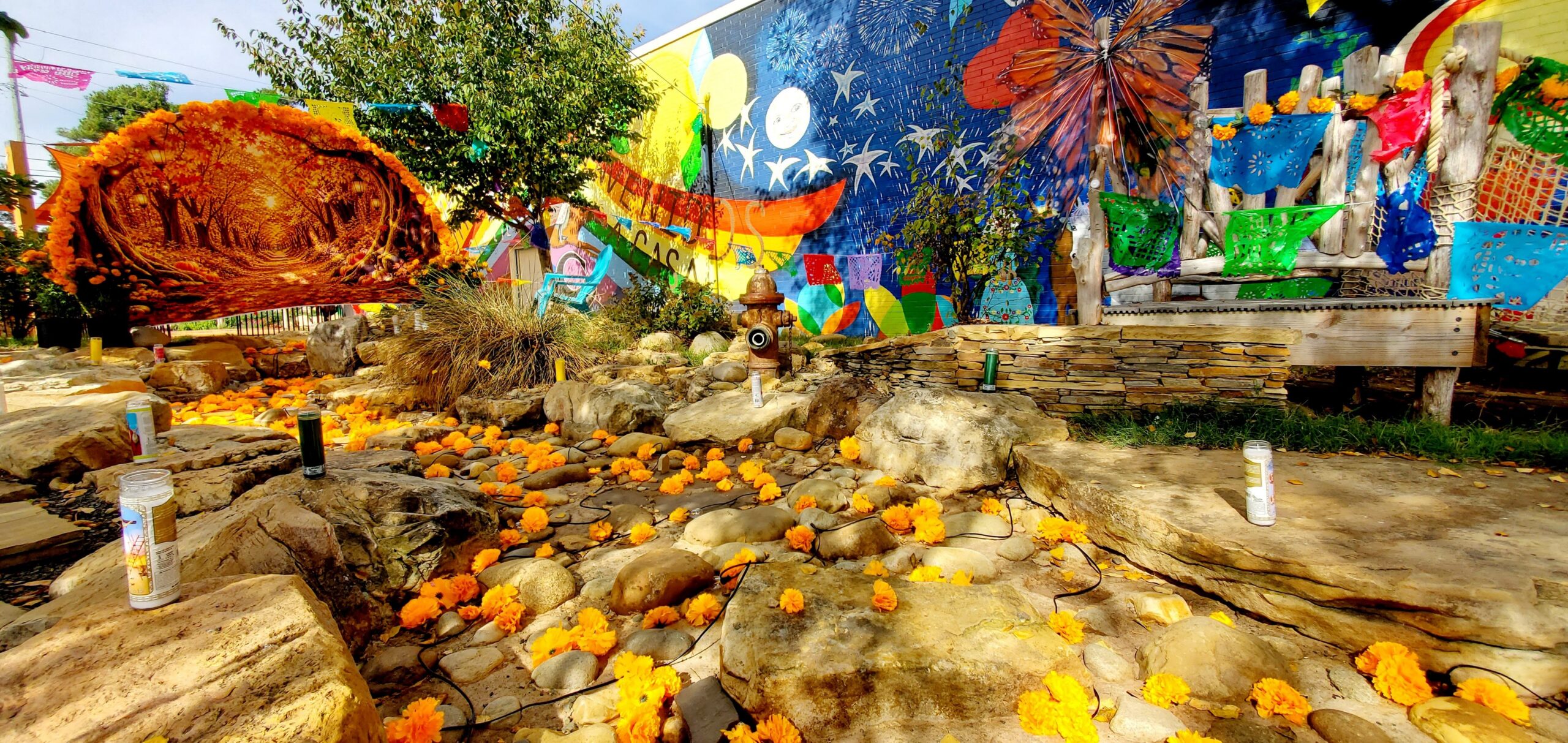
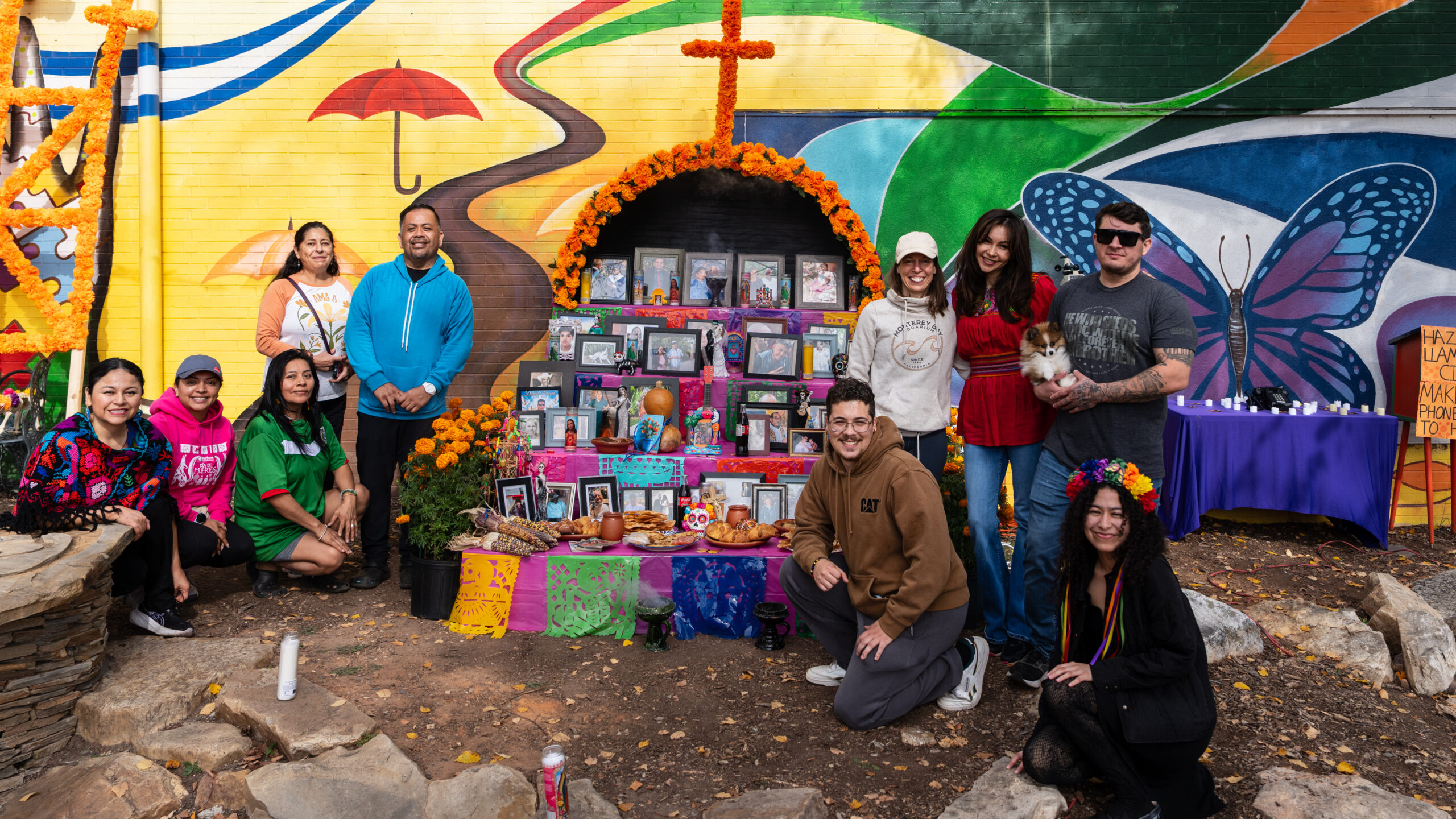
As colorful papel picado danced in the breeze between the trees, our garden slowly transformed. Hands came together to build the altar, arrange decorations, and prepare a space where we could remember loved ones, celebrate life, and find comfort in one another.
Watching everything come together, we were reminded of how meaningful it is to have a place where familiar traditions can make us feel at home, even when we are far from the places where we grew up. For many, Día de los Muertos carries memories of family, childhood, and the people we miss. Having a space to share those traditions can help ease the distance and remind us that we remain connected to our roots.
Throughout the day, we saw that connection take many forms.
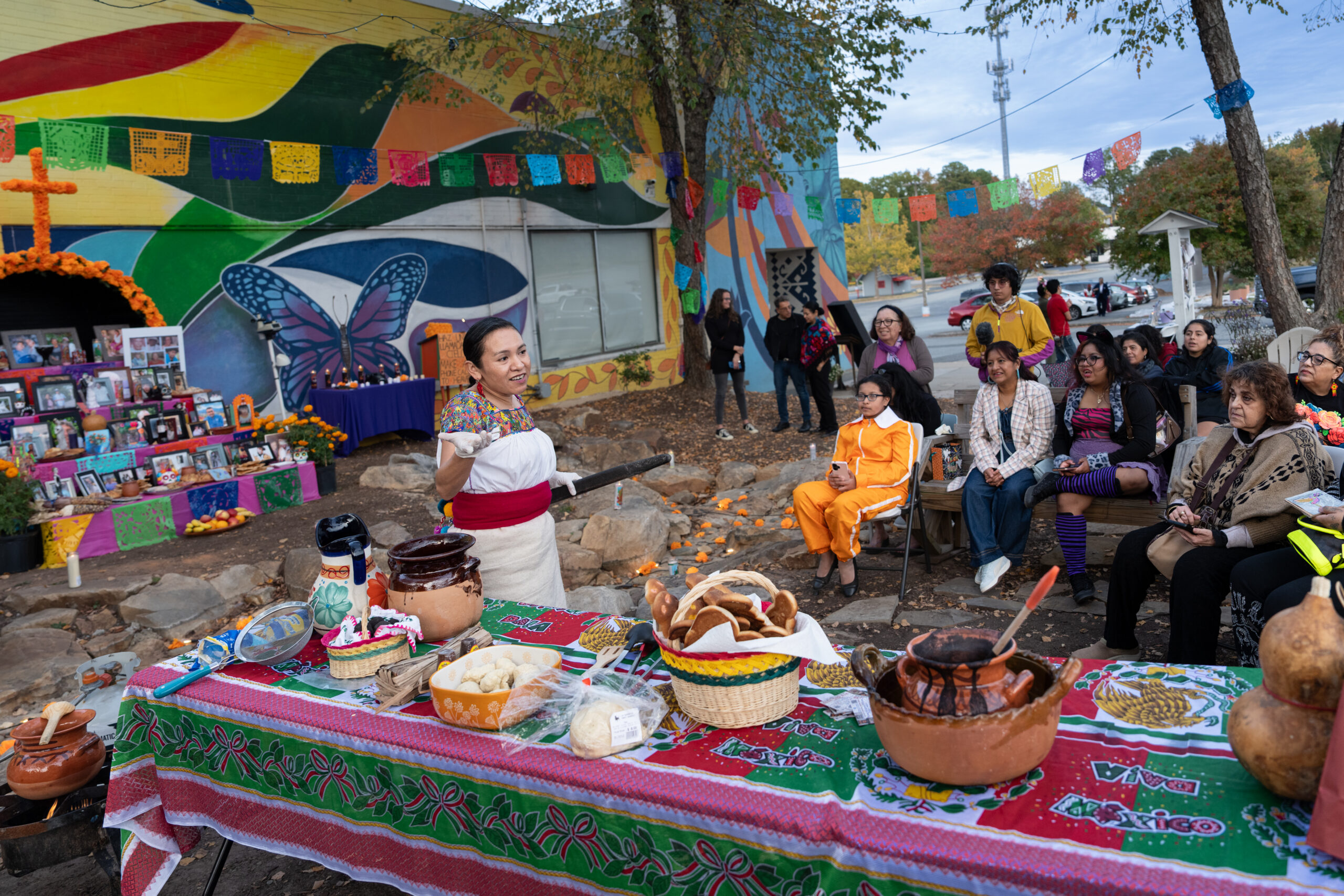
During the traditional tin art workshop, people of different ages and backgrounds gathered to create, experiment, and laugh together. Children showed their parents what they had learned, while caregivers took a moment to explore their own creativity and rediscover the curiosity of childhood. It was a simple but beautiful reminder that learning and creating together can bring us closer.
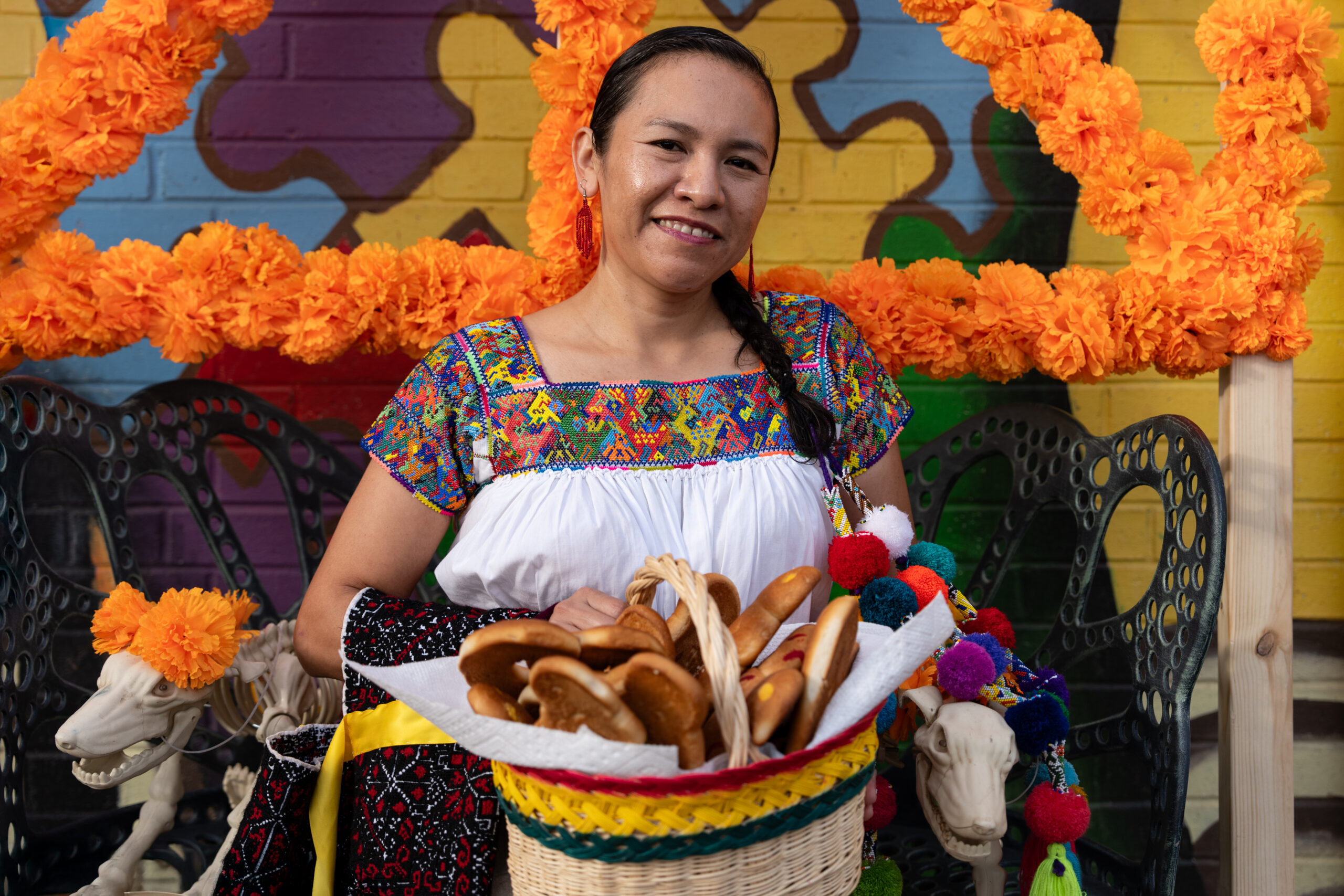
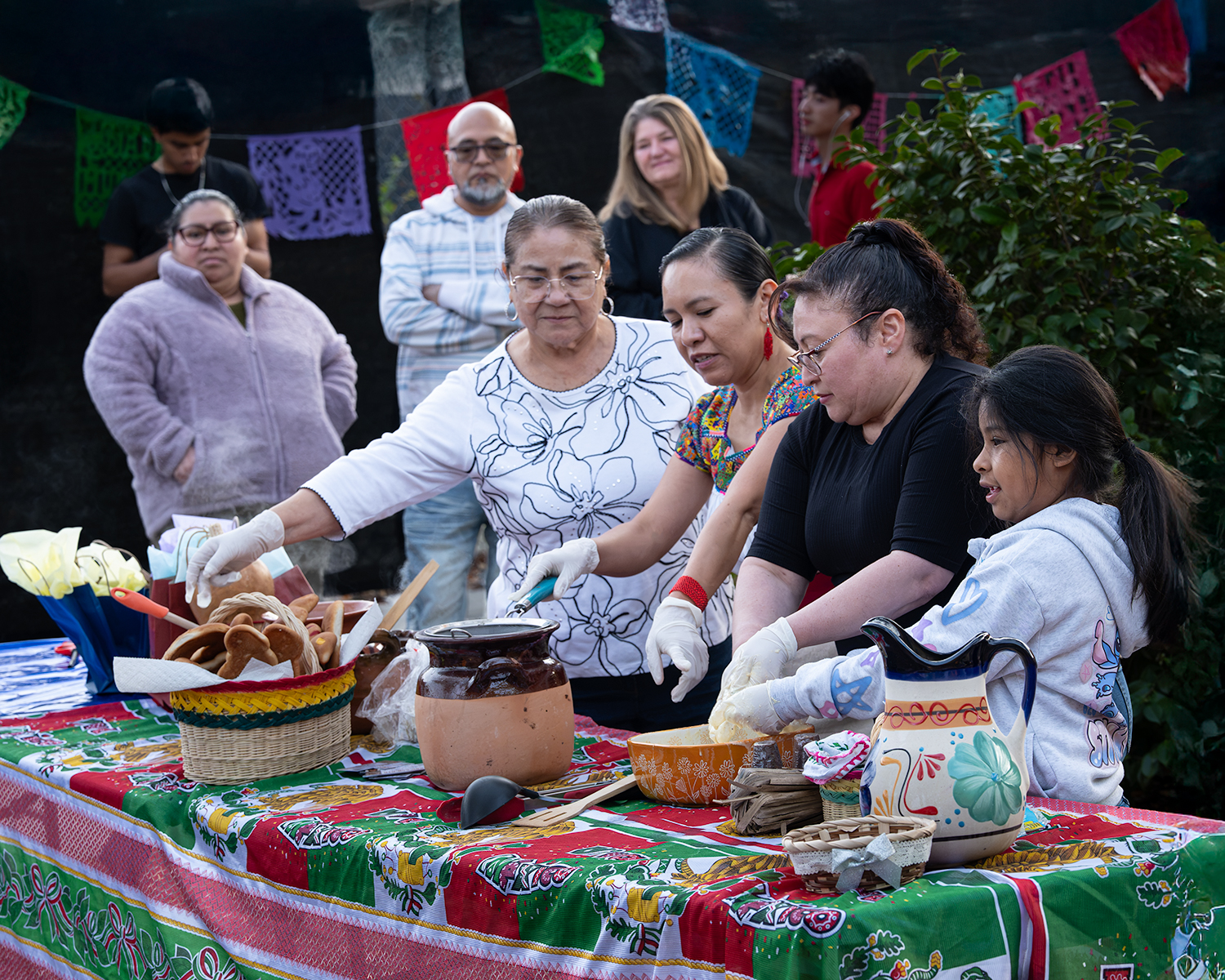
The “atole” workshop (traditional Mexican hot beverage made from sweetened, thickened corn dough) offered another kind of connection. As people gathered around this familiar tradition, we were reminded of how much we share when we invite others into our cultures and take the time to learn about theirs. Our backgrounds may be different, but the traditions, stories, and experiences we exchange can become bridges between us.
By the afternoon, the garden had become something more than a gathering space. It was filled with light, music, color, and stories. It was a place for those who had grown up celebrating “Día de los Muertos” and for those discovering the tradition for the first time. A place where everyone could honor the people they miss and celebrate the lives and memories that continue to shape them.
At one point, someone shared a thought that stayed with us: No matter where we are, we are never truly alone because there will always be someone in our Latino community with whom we can celebrate.
Looking around, we could feel the depth of those words. Our different histories, places of origin, and relationships with this tradition became less important than what we were sharing in that moment: compassion, love, and care for one another.
Creating Spaces Where Healing Can Happen
At El Futuro, we know that supporting mental well-being extends beyond clinical services. It also means creating opportunities for people to connect, feel understood, celebrate their identities, and experience a sense of belonging. Days like this remind us that healing can begin in many ways: through a shared tradition, a creative activity, a familiar taste, or simply the feeling of being welcomed.
These moments are possible because of a community of people who believe that everyone deserves a place to feel at home. The generosity of our donors and partners helps us continue creating spaces where culture is honored, relationships grow, and our community can find support.
Sometimes, the most meaningful thing we can offer someone is a place where they know they belong.
Thanks to Alexander Sabala, Project Manager for Youth Mental Health and Community Engagement at El Futuro, who helps create and lead community experiences that bring people together through culture, connection, and shared learning.

 Alvely Alcántara, LCSW
 Rossy C. Garcia, MEd
 Katy Sims, MD
 Everardo Aviles, LCSW, LCAS (Eve)
 As a medical anthropologist and social work researcher, Dr. Gulbas’ research embodies interdisciplinarity through the integration of applied theories of health and human development with qualitative and ethnographic methodologies. Her work seeks to understand how people—children, families, and providers—navigate complex sociocultural landscapes in the pursuit of mental health. Most of her work, to date, focuses attention on developing more robust interpretations of suicide risk. With funding from the National Institutes of Mental Health, this body of research has contributed to advancements in theoretical and empirical knowledge of the broader contexts within which youth suicide risk is situated.
 R. Gabriela Barajas-Gonzalez is a developmental psychologist and an assistant professor of Population Health at NYU Grossman School of Medicine. Dr. Barajas-Gonzalez is the principal investigator of a study that examines the impact of immigration-related threat and stress on school communities. She earned a PhD in developmental psychology from Columbia University and hold a BA in human biology from Stanford University. Dr. Barajas-Gonzalez is the daughter of Mexican immigrants and a first gen college student.
 Dr. Parra-Cardona is an Associate Professor in the Steve Hicks School of Social Work (SHSSW) at the University of Texas at Austin. At the SHSSW, he serves as Coordinator for Mexico and Latin American initiatives. He also serves as Area Director for Research at the UT Austin Latino Research Institute. Dr. Parra-Cardona’s program of research is focused on the cultural adaptation of evidence-based parenting interventions for low-income Latinx populations in the US and Latin America.
 Bianka Reese, PhD, MSPH is a research scientist and program evaluator specializing in adolescent and young adult sexual and reproductive health. Her previous research in the experiences of Latinx LGBTQ+ youth stems from her work as the Research and Evaluation Manager at SHIFT NC (Sexual Initiatives For Teens), where she led largescale evaluations of multilevel, community-based sexual health promotion initiatives and research projects aimed at elevating the voices of diverse youth in North Carolina. Dr. Reese is currently the Senior Research Strategist at Creative Research Solutions, LLC, an award-winning national evaluation, research, and assessment firm.
 Tania Connaughton-Espino, MPH is an independent researcher focused on adolescent and young adult sexual and reproductive health. Her interest in the experiences of Latinx LGBTQ+ youth stems from her previous work with SHIFT NC (Sexual Initiatives For Teens), where she led the training and evaluation department, conducted capacity-building workshops for youth serving professionals including on the topic of how to be more affirming of LGBTQ youth, and from her extensive experience working with the Latinx population in NC.
 Maru Gonzalez, EdD is an Assistant Professor and Youth Development Specialist in the Department of Agricultural and Human Sciences at North Carolina State University. Her areas of inquiry include youth development with a focus on activism, social justice, and the experiences of LGBTQ+ young people across familial, school, and community contexts.
 Nayeli Y. Chavez-Dueñas, PhD
 Hector Y. Adames, PsyD