
At El Futuro, we believe healing begins in community. Our latest Annual Report reflects a year of growth, resilience, and deepened commitment to culturally responsive mental health care for Latino families across North Carolina.
A Year of Impact
During 2025, El Futuro served 3,168 people and families in 67 counties across North Carolina, providing 20,690 treatment sessions. As community needs continued to grow, so did our reach — through clinical services, community-based programs, and prevention efforts. Our impact reflects not only the number of people served, but the depth of connection and trust built through care that honors language, culture, and lived experience.
Community-Led Care in Action
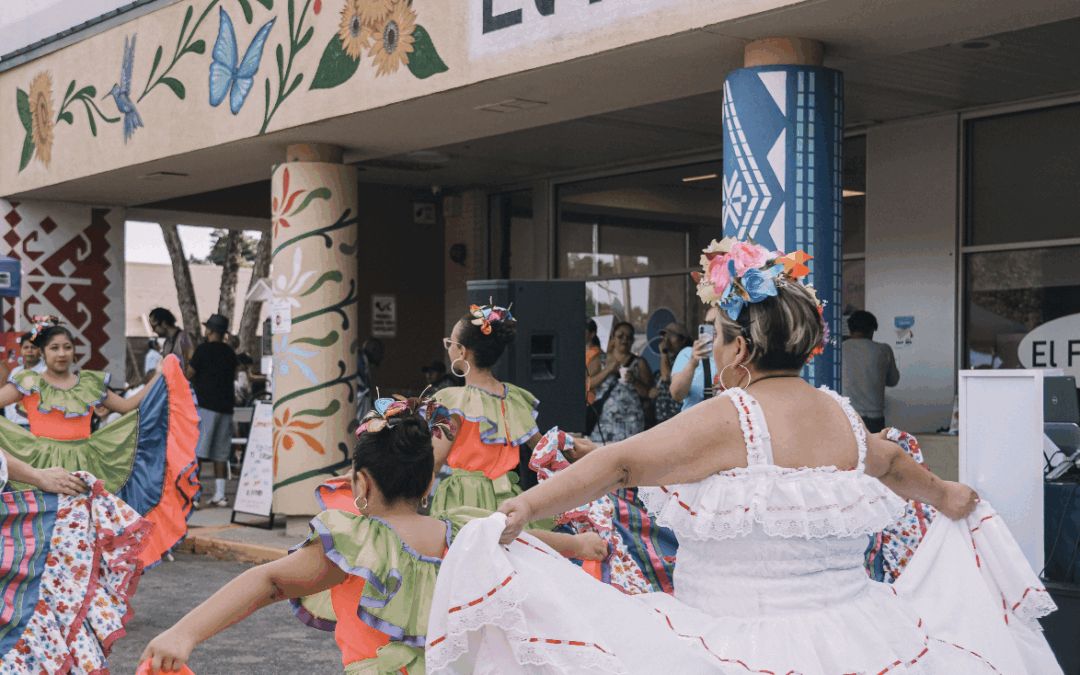
El Futuro’s work is grounded in the belief that healing happens best in community. Through our community-driven model, we partner with trusted community organizations and leaders to bring mental health support beyond clinic walls. Thanks to their support and the amazing work of our talented staff, 2,528 families attended 29 Greenspace community events. This approach reduces stigma, strengthens access, and creates welcoming spaces where individuals and families feel seen, respected, and supported.
Gratitude and Shared Vision
This work is made possible by the dedication of our 90 staff members, the trust of our community, and the generosity of our donors and partners. Together, we are building a future where mental health care is equitable, culturally responsive, and rooted in community.
Stewardship, Sustainability, and the Road Ahead
El Futuro remains committed to strong stewardship and long-term sustainability. Over the past year, we strengthened our financial foundation and deepened partnerships that support stable, responsible growth.
Looking ahead, we are focused not only on expanding access, but on scaling community-centered models that work, ensuring our impact can grow alongside the needs of our communities.
“After closing 2024 with a deficit, we set a bold goal to return to the black, and thanks to your extraordinary support, we did just that. We also took important steps toward more sustainable funding, with a growing share of support coming from healthcare partners. As community needs continue to rise, we expect both expenses and revenue to grow, and we remain deeply committed to meeting that growth with transparency, stability, and care.”
 Alvely Alcántara, LCSW
 Rossy C. Garcia, MEd
  Katy Sims, MD
  Everardo Aviles, LCSW, LCAS (Eve)
 As a medical anthropologist and social work researcher, Dr. Gulbas’ research embodies interdisciplinarity through the integration of applied theories of health and human development with qualitative and ethnographic methodologies. Her work seeks to understand how people—children, families, and providers—navigate complex sociocultural landscapes in the pursuit of mental health. Most of her work, to date, focuses attention on developing more robust interpretations of suicide risk. With funding from the National Institutes of Mental Health, this body of research has contributed to advancements in theoretical and empirical knowledge of the broader contexts within which youth suicide risk is situated.
  R. Gabriela Barajas-Gonzalez is a developmental psychologist and an assistant professor of Population Health at NYU Grossman School of Medicine. Dr. Barajas-Gonzalez is the principal investigator of a study that examines the impact of immigration-related threat and stress on school communities. She earned a PhD in developmental psychology from Columbia University and hold a BA in human biology from Stanford University. Dr. Barajas-Gonzalez is the daughter of Mexican immigrants and a first gen college student.
 Dr. Parra-Cardona is an Associate Professor in the Steve Hicks School of Social Work (SHSSW) at the University of Texas at Austin. At the SHSSW, he serves as Coordinator for Mexico and Latin American initiatives. He also serves as Area Director for Research at the UT Austin Latino Research Institute. Dr. Parra-Cardona’s program of research is focused on the cultural adaptation of evidence-based parenting interventions for low-income Latinx populations in the US and Latin America.
 Bianka Reese, PhD, MSPH is a research scientist and program evaluator specializing in adolescent and young adult sexual and reproductive health. Her previous research in the experiences of Latinx LGBTQ+ youth stems from her work as the Research and Evaluation Manager at SHIFT NC (Sexual Initiatives For Teens), where she led largescale evaluations of multilevel, community-based sexual health promotion initiatives and research projects aimed at elevating the voices of diverse youth in North Carolina. Dr. Reese is currently the Senior Research Strategist at Creative Research Solutions, LLC, an award-winning national evaluation, research, and assessment firm.
 Tania Connaughton-Espino, MPH is an independent researcher focused on adolescent and young adult sexual and reproductive health. Her interest in the experiences of Latinx LGBTQ+ youth stems from her previous work with SHIFT NC (Sexual Initiatives For Teens), where she led the training and evaluation department, conducted capacity-building workshops for youth serving professionals including on the topic of how to be more affirming of LGBTQ youth, and from her extensive experience working with the Latinx population in NC.
 Maru Gonzalez, EdD is an Assistant Professor and Youth Development Specialist in the Department of Agricultural and Human Sciences at North Carolina State University. Her areas of inquiry include youth development with a focus on activism, social justice, and the experiences of LGBTQ+ young people across familial, school, and community contexts.
  Nayeli Y. Chavez-Dueñas, PhD
 Hector Y. Adames, PsyD