
 A recently published statewide report, State of North Carolina’s Mental Health and Substance Use Services Workforce: Need, Supply, and Distribution Landscape Assessment (2026), highlights urgent and growing challenges across the behavioral health system.
The findings are clear: demand for services continues to outpace supply, with significant shortages across professions, especially prescribers and child and adolescent specialists. At the same time, youth and young adults are experiencing increasing mental health needs, and emergency departments continue to serve as a safety net for care.
One of the most critical gaps identified is the shortage of bilingual and culturally responsive providers across the state. These challenges point to the need for expanded training, stronger workforce pipelines, and community-based approaches that extend beyond traditional clinical settings.
How TECS Is Responding
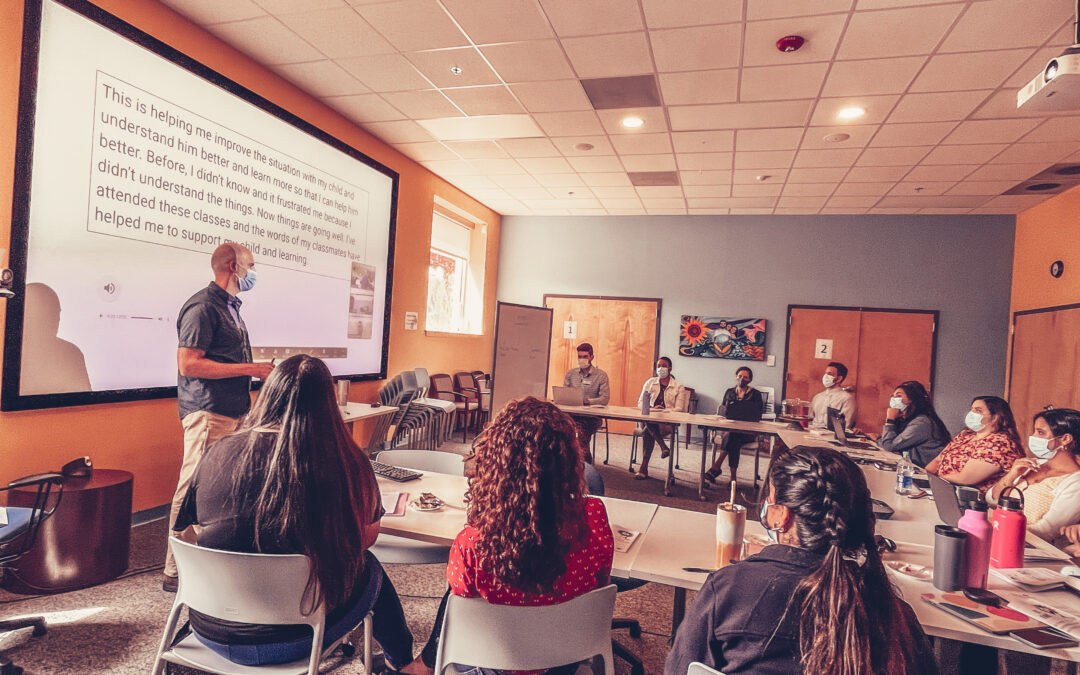
El Futuro’s Training, Education & Consultation Services (TECS) was built to directly address these gaps. Its approach aligns closely with the report’s recommendations—focusing on workforce development, cultural responsiveness, and scalable, community-centered solutions.
TECS operates across five key areas:
- Workforce Training: Providing practical, skills-based training for clinicians, paraprofessionals, and community-based providers—designed to be immediately applicable and culturally responsive.
- Sharing Mental Health Resources: Expanding access to culturally relevant tools, webinars, and resource libraries, particularly for providers in rural or under-resourced areas.
- Behavioral Health Career Pathways: Supporting Latino and Spanish-speaking students and professionals through mentorship, internships, and partnerships to strengthen long-term workforce pipelines.
- Scalable Learning Models: Offering in-person, virtual, and hybrid training formats to increase reach across North Carolina.
- Statewide Partnerships & Community Leadership: Collaborating with community organizations, faith groups, and institutions to build sustainable, community-led capacity.
 Early Reach and Impact
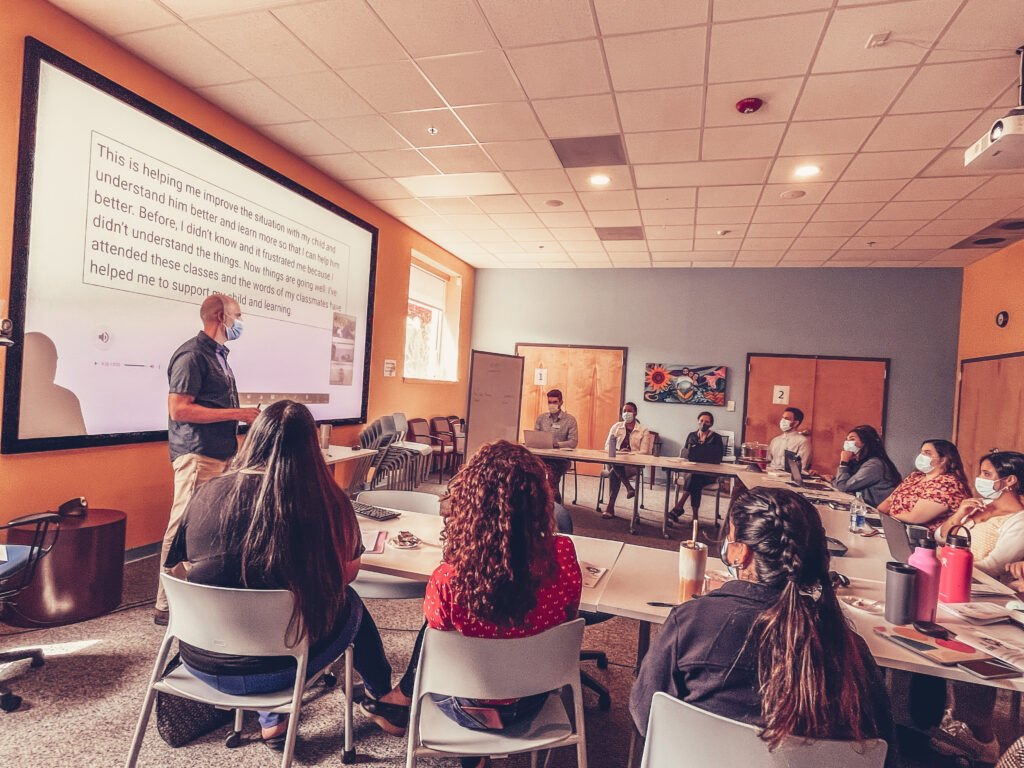
With support from NCDHHS, TECS has already engaged approximately 1,300 participants across North Carolina’s behavioral health ecosystem. This includes clinicians, peer support specialists, community-based organization staff, students, prescribers, and faith leaders.
Participant feedback reflects strong practical impact: 96.6% report they learned something new, also saying they can apply what they learned to improve mental health outcomes, and would recommend the training to others. This level of engagement suggests that culturally and linguistically responsive training is not only needed, but effective.
Aligning with Statewide Priorities
The 2026 workforce assessment calls for several key actions: expanding bilingual capacity, addressing rural access gaps, strengthening community-based models, and investing in sustainable workforce pipelines. TECS is already advancing these priorities by:
- Training bilingual and community-rooted providers
- Expanding access through partnerships and flexible learning formats
- Including peer support specialists, community health workers, and local leaders in workforce development
- Building pathways for future providers through student engagement and mentorship
TECS represents a scalable, community-informed approach that is already contributing to this effort—building a workforce that is more accessible, more representative, and better equipped to meet the needs of North Carolina’s diverse communities.
 Alvely Alcántara, LCSW
 Rossy C. Garcia, MEd
  Katy Sims, MD
  Everardo Aviles, LCSW, LCAS (Eve)
 As a medical anthropologist and social work researcher, Dr. Gulbas’ research embodies interdisciplinarity through the integration of applied theories of health and human development with qualitative and ethnographic methodologies. Her work seeks to understand how people—children, families, and providers—navigate complex sociocultural landscapes in the pursuit of mental health. Most of her work, to date, focuses attention on developing more robust interpretations of suicide risk. With funding from the National Institutes of Mental Health, this body of research has contributed to advancements in theoretical and empirical knowledge of the broader contexts within which youth suicide risk is situated.
  R. Gabriela Barajas-Gonzalez is a developmental psychologist and an assistant professor of Population Health at NYU Grossman School of Medicine. Dr. Barajas-Gonzalez is the principal investigator of a study that examines the impact of immigration-related threat and stress on school communities. She earned a PhD in developmental psychology from Columbia University and hold a BA in human biology from Stanford University. Dr. Barajas-Gonzalez is the daughter of Mexican immigrants and a first gen college student.
 Dr. Parra-Cardona is an Associate Professor in the Steve Hicks School of Social Work (SHSSW) at the University of Texas at Austin. At the SHSSW, he serves as Coordinator for Mexico and Latin American initiatives. He also serves as Area Director for Research at the UT Austin Latino Research Institute. Dr. Parra-Cardona’s program of research is focused on the cultural adaptation of evidence-based parenting interventions for low-income Latinx populations in the US and Latin America.
 Bianka Reese, PhD, MSPH is a research scientist and program evaluator specializing in adolescent and young adult sexual and reproductive health. Her previous research in the experiences of Latinx LGBTQ+ youth stems from her work as the Research and Evaluation Manager at SHIFT NC (Sexual Initiatives For Teens), where she led largescale evaluations of multilevel, community-based sexual health promotion initiatives and research projects aimed at elevating the voices of diverse youth in North Carolina. Dr. Reese is currently the Senior Research Strategist at Creative Research Solutions, LLC, an award-winning national evaluation, research, and assessment firm.
 Tania Connaughton-Espino, MPH is an independent researcher focused on adolescent and young adult sexual and reproductive health. Her interest in the experiences of Latinx LGBTQ+ youth stems from her previous work with SHIFT NC (Sexual Initiatives For Teens), where she led the training and evaluation department, conducted capacity-building workshops for youth serving professionals including on the topic of how to be more affirming of LGBTQ youth, and from her extensive experience working with the Latinx population in NC.
 Maru Gonzalez, EdD is an Assistant Professor and Youth Development Specialist in the Department of Agricultural and Human Sciences at North Carolina State University. Her areas of inquiry include youth development with a focus on activism, social justice, and the experiences of LGBTQ+ young people across familial, school, and community contexts.
  Nayeli Y. Chavez-Dueñas, PhD
 Hector Y. Adames, PsyD