
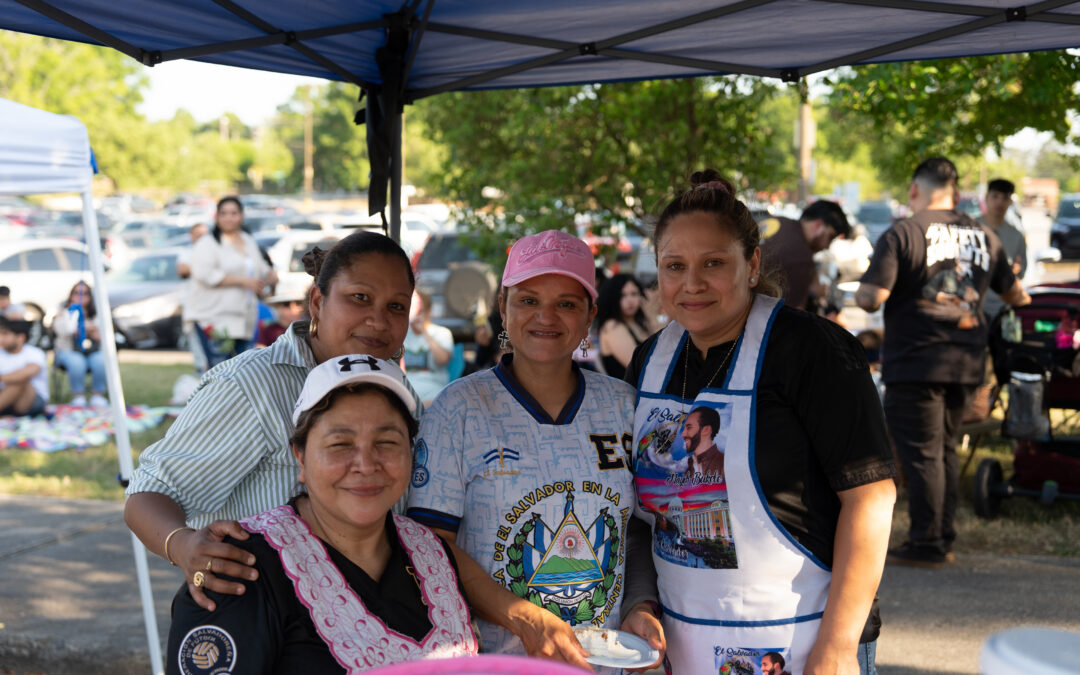
At El Futuro, we know that mental health care begins with connection, trust, and community. Thanks to the dedication of our staff, partners, and supporters, our work continues to grow; not only by serving families across North Carolina, but also by sharing our expertise with communities across the country and beyond.
In recent months, El Futuro’s programs and leaders have reached new audiences, strengthened partnerships, and helped advance conversations about culturally responsive mental health care.
Sharing Knowledge Beyond North Carolina
Our commitment to serving immigrant and Latino communities has positioned El Futuro as a leader in the field of community-driven and culturally responsive care. Recently, our ADHD team presented at the Immigrant Learning Network conference on supporting immigrant students with ADHD. The national conference brought together hundreds of participants from across the country, and attendees highlighted the importance of the information shared and the team’s ability to communicate resources in ways that honor different cultures and languages.
Our reach continues to expand through educational opportunities and partnerships. Nearly half of attendees at recent El Futuro webinars have joined from outside North Carolina, demonstrating the growing need for accessible mental health information and resources.
Our ADHD program was also recognized by ADDitude Magazine, a leading national publication serving millions of readers interested in ADHD. The team has been invited to contribute an upcoming article, participate in a national webinar, and explore future opportunities to share expertise with a broader audience.
Building Stronger Communities Across North Carolina
While our reach continues to expand, our mission remains rooted in community. Across North Carolina, El Futuro teams are creating spaces where families can connect, learn, and find support.
At Hope Valley Elementary School, our Mentes Fuertes and ADHD teams partnered to support nearly Latino families with tools and resources to strengthen children’s emotional well-being, mental health, and learning success. Families engaged in meaningful conversations and connected with resources in a welcoming, culturally responsive environment.
Through our partnership with CANDOR and El Futuro’s Therapeutic Greenspace, families of children with ADHD also gathered for a day of connection, learning, and community. These spaces help reduce isolation and remind families that they do not have to navigate their journey alone.
Advocating for mental health across sectors
El Futuro continues to bring mental health conversations into spaces where they are deeply needed. Luis Alvarez, Board Chair, represented El Futuro at the National Association of Hispanic Real Estate Professionals Raleigh/Triangle Chapter, continuing advocacy around the importance of mental health and substance use supports as essential for communities, workplaces, and the economy.
Our Youth Advisory Council is also expanding its impact, with LAYA’s abstract (Latine Adolescent and Young Adults Program) accepted for presentation at the International Association of Youth Mental Health, where they will share about the council as a protective ecosystem for young people.
A growing movement of hope and connection
Every presentation, partnership, and community gathering reflects the same commitment: making mental health care more accessible, culturally responsive, and connected to the people who need it most.
To our donors and supporters: thank you for making this work possible. Your investment helps El Futuro not only provide care to families today, but also share knowledge, strengthen communities, and create lasting change across North Carolina and beyond.
 Alvely Alcántara, LCSW
 Rossy C. Garcia, MEd
  Katy Sims, MD
  Everardo Aviles, LCSW, LCAS (Eve)
 As a medical anthropologist and social work researcher, Dr. Gulbas’ research embodies interdisciplinarity through the integration of applied theories of health and human development with qualitative and ethnographic methodologies. Her work seeks to understand how people—children, families, and providers—navigate complex sociocultural landscapes in the pursuit of mental health. Most of her work, to date, focuses attention on developing more robust interpretations of suicide risk. With funding from the National Institutes of Mental Health, this body of research has contributed to advancements in theoretical and empirical knowledge of the broader contexts within which youth suicide risk is situated.
  R. Gabriela Barajas-Gonzalez is a developmental psychologist and an assistant professor of Population Health at NYU Grossman School of Medicine. Dr. Barajas-Gonzalez is the principal investigator of a study that examines the impact of immigration-related threat and stress on school communities. She earned a PhD in developmental psychology from Columbia University and hold a BA in human biology from Stanford University. Dr. Barajas-Gonzalez is the daughter of Mexican immigrants and a first gen college student.
 Dr. Parra-Cardona is an Associate Professor in the Steve Hicks School of Social Work (SHSSW) at the University of Texas at Austin. At the SHSSW, he serves as Coordinator for Mexico and Latin American initiatives. He also serves as Area Director for Research at the UT Austin Latino Research Institute. Dr. Parra-Cardona’s program of research is focused on the cultural adaptation of evidence-based parenting interventions for low-income Latinx populations in the US and Latin America.
 Bianka Reese, PhD, MSPH is a research scientist and program evaluator specializing in adolescent and young adult sexual and reproductive health. Her previous research in the experiences of Latinx LGBTQ+ youth stems from her work as the Research and Evaluation Manager at SHIFT NC (Sexual Initiatives For Teens), where she led largescale evaluations of multilevel, community-based sexual health promotion initiatives and research projects aimed at elevating the voices of diverse youth in North Carolina. Dr. Reese is currently the Senior Research Strategist at Creative Research Solutions, LLC, an award-winning national evaluation, research, and assessment firm.
 Tania Connaughton-Espino, MPH is an independent researcher focused on adolescent and young adult sexual and reproductive health. Her interest in the experiences of Latinx LGBTQ+ youth stems from her previous work with SHIFT NC (Sexual Initiatives For Teens), where she led the training and evaluation department, conducted capacity-building workshops for youth serving professionals including on the topic of how to be more affirming of LGBTQ youth, and from her extensive experience working with the Latinx population in NC.
 Maru Gonzalez, EdD is an Assistant Professor and Youth Development Specialist in the Department of Agricultural and Human Sciences at North Carolina State University. Her areas of inquiry include youth development with a focus on activism, social justice, and the experiences of LGBTQ+ young people across familial, school, and community contexts.
  Nayeli Y. Chavez-Dueñas, PhD
 Hector Y. Adames, PsyD