
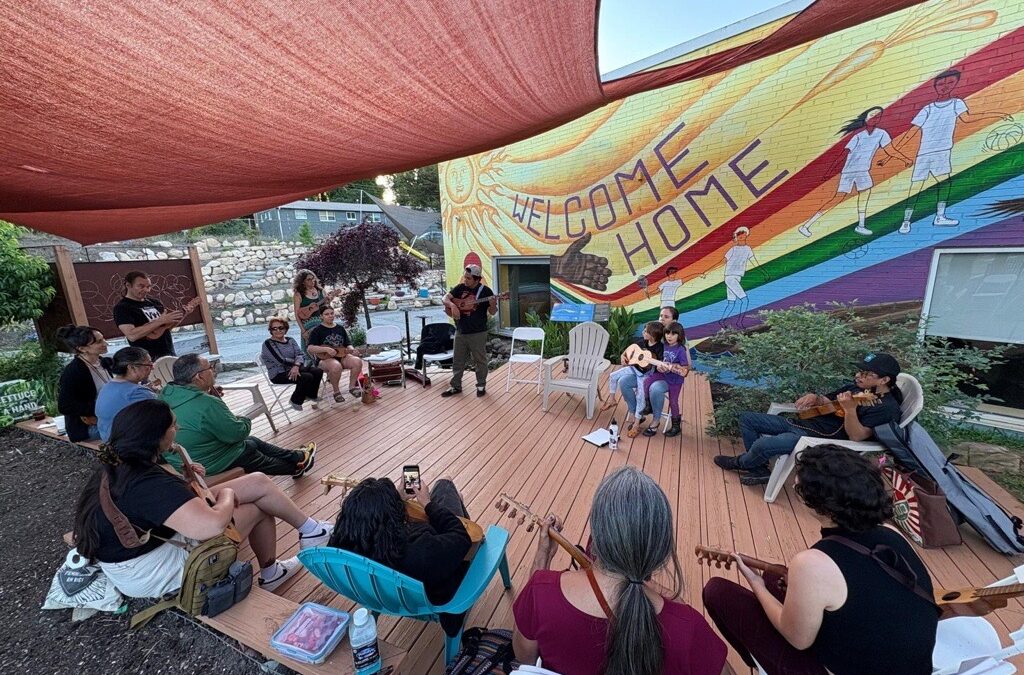
At El Futuro, this approach is not new. It is rooted in who we are.
For Latino familias, mental health can be deeply connected to culture, land, ancestry, and community. When families are separated from their countries of origin, they often lose access not only to healthcare systems, but to the cultural practices that sustained generations before them. Reconnection can be profoundly healing.
This March, El Futuro is creating spaces where that reconnection can happen.
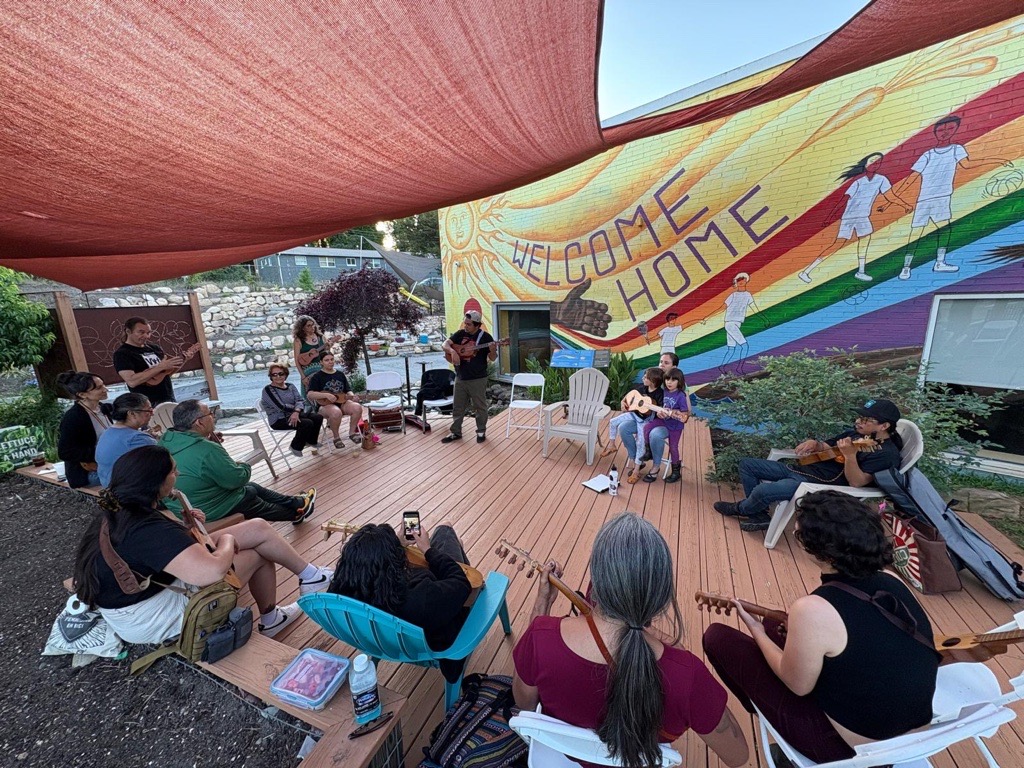
Son Jarocho Community Music Workshops
In partnership with Son de Carolina, we are hosting five beginner-friendly music workshops rooted in Son Jarocho, traditional music from Veracruz, Mexico. These gatherings are open to all ages and hosted in Spanish. Instruments are provided, removing common barriers to participation.
Son Jarocho is more than music. It is community. It carries social justice roots, honors the earth, celebrates life, and remembers those who came before us. Families will learn to play a “son” and practice zapateado. Last year, youth workshop participants even performed for their parents — a powerful moment of pride and belonging.
Talleres de Salud Comunitario: Medicinal Plant Workshops
Beginning March 19, one of our Community Mental Health Workers, Lucia, will facilitate a three-part workshop series exploring the history, benefits, and safe use of medicinal plants commonly found in grocery stores. Participants will learn how to make soap and extract oils while sharing knowledge across generations — teenagers, parents, and elders learning side by side.
These workshops are about more than skills. They are about restoring knowledge that migration and displacement often interrupt.
As the WHO calls for stronger integration of traditional medicine into health systems worldwide, El Futuro continues to model what culturally grounded mental health care looks like at the community level: safe spaces, shared learning, multigenerational healing, and joy.
Join us! Workshops begin in March and will continue throughout April. Sessions will be held in Spanish and all are welcome.
 Alvely Alcántara, LCSW
 Rossy C. Garcia, MEd
  Katy Sims, MD
  Everardo Aviles, LCSW, LCAS (Eve)
 As a medical anthropologist and social work researcher, Dr. Gulbas’ research embodies interdisciplinarity through the integration of applied theories of health and human development with qualitative and ethnographic methodologies. Her work seeks to understand how people—children, families, and providers—navigate complex sociocultural landscapes in the pursuit of mental health. Most of her work, to date, focuses attention on developing more robust interpretations of suicide risk. With funding from the National Institutes of Mental Health, this body of research has contributed to advancements in theoretical and empirical knowledge of the broader contexts within which youth suicide risk is situated.
  R. Gabriela Barajas-Gonzalez is a developmental psychologist and an assistant professor of Population Health at NYU Grossman School of Medicine. Dr. Barajas-Gonzalez is the principal investigator of a study that examines the impact of immigration-related threat and stress on school communities. She earned a PhD in developmental psychology from Columbia University and hold a BA in human biology from Stanford University. Dr. Barajas-Gonzalez is the daughter of Mexican immigrants and a first gen college student.
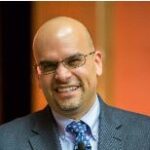 Dr. Parra-Cardona is an Associate Professor in the Steve Hicks School of Social Work (SHSSW) at the University of Texas at Austin. At the SHSSW, he serves as Coordinator for Mexico and Latin American initiatives. He also serves as Area Director for Research at the UT Austin Latino Research Institute. Dr. Parra-Cardona’s program of research is focused on the cultural adaptation of evidence-based parenting interventions for low-income Latinx populations in the US and Latin America.
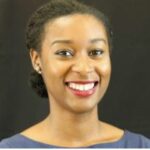 Bianka Reese, PhD, MSPH is a research scientist and program evaluator specializing in adolescent and young adult sexual and reproductive health. Her previous research in the experiences of Latinx LGBTQ+ youth stems from her work as the Research and Evaluation Manager at SHIFT NC (Sexual Initiatives For Teens), where she led largescale evaluations of multilevel, community-based sexual health promotion initiatives and research projects aimed at elevating the voices of diverse youth in North Carolina. Dr. Reese is currently the Senior Research Strategist at Creative Research Solutions, LLC, an award-winning national evaluation, research, and assessment firm.
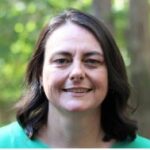 Tania Connaughton-Espino, MPH is an independent researcher focused on adolescent and young adult sexual and reproductive health. Her interest in the experiences of Latinx LGBTQ+ youth stems from her previous work with SHIFT NC (Sexual Initiatives For Teens), where she led the training and evaluation department, conducted capacity-building workshops for youth serving professionals including on the topic of how to be more affirming of LGBTQ youth, and from her extensive experience working with the Latinx population in NC.
 Maru Gonzalez, EdD is an Assistant Professor and Youth Development Specialist in the Department of Agricultural and Human Sciences at North Carolina State University. Her areas of inquiry include youth development with a focus on activism, social justice, and the experiences of LGBTQ+ young people across familial, school, and community contexts.
  Nayeli Y. Chavez-Dueñas, PhD
 Hector Y. Adames, PsyD