

DURHAM — A $500,000 grant to Durham-based El Futuro is expected to help hundreds of additional low-income immigrant Latinos thrive at work, school, and home.
The award, announced Wednesday, was made by the Oak Foundation, based in Geneva, Switzerland.
“We are blown away by the generosity of Oak Foundation and their support for people in our community who are living on the margins,” said Dr. Luke Smith, a psychiatrist, founder and executive director of the nonprofit that provides mental health and addiction counseling to Latinos in Durham and 14 counties in central North Carolina.
Kerry Brock, El Futuro’s manager of grants and strategic development, said the money will be used over four years, and is expected to help an extra 100 immigrant Latinos each year between now and 2019.
In recent years, El Futuro has served more than 1,500 members of the Latino community each year, with evidence-based mental health and addictions outpatient counseling. Latino children and families receive care at El Futuro’s two clinics — in Durham and Siler City — with a team including clinically trained substance abuse counselors, social workers, psychologists, child and adolescent psychiatrists, and marriage and family therapists.
Roughly three-quarters of those served are either stabilized or show improvement in their clinical symptoms and function better at home, work or school, according to El Futuro.
Between 2000 and 2010, North Carolina experienced the sixth-fastest rate of growth in the nation of Latinos, and that trend continues. In the Triangle, the Latino population grew by 128.5 percent in this same period.
The grant will:
— Help unaccompanied minors who come into community. Recently, 54 percent of the children seen at El Futuro fell into that group.
— Provide treatments for traumatized Latinos.
— Improve access to services.
— Address workforce shortages by training professionals and supervising interns from UNC-Chapel Hill, Duke University and N.C. State.
Impacts of the treatments supported by the grant can already be seen, according to El Futuro’s clinical director, Karla Siu.
“I think of a young girl that we worked with recently,” she said. “Because of a history of trauma and abuse, she came to us having such terrible panic attacks that she had been unable to go to school for an entire year. After starting treatment, not only did she gain the tools to help her go back to school, but she also came in recently and showed off her report card, with all A’s and B’s. Her confidence has soared, along with her ability to grow and learn at her best. This is the type of impact that will be supported by the generous grant from Oak Foundation, and we are so grateful.
El Futuro helps Latino families with services that would not otherwise be accessible, regardless of insurance status or ability to pay. While the organization receives money from Medicaid, Health Choice, Medicare, and some private insurance, it relies on grants, contracts, corporate, and private charitable donations to support 60 percent of the costs of treating a patient.
 Alvely Alcántara, LCSW
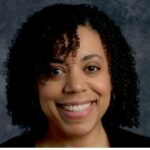 Rossy C. Garcia, MEd
 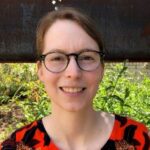 Katy Sims, MD
 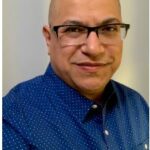 Everardo Aviles, LCSW, LCAS (Eve)
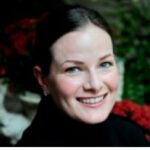 As a medical anthropologist and social work researcher, Dr. Gulbas’ research embodies interdisciplinarity through the integration of applied theories of health and human development with qualitative and ethnographic methodologies. Her work seeks to understand how people—children, families, and providers—navigate complex sociocultural landscapes in the pursuit of mental health. Most of her work, to date, focuses attention on developing more robust interpretations of suicide risk. With funding from the National Institutes of Mental Health, this body of research has contributed to advancements in theoretical and empirical knowledge of the broader contexts within which youth suicide risk is situated.
 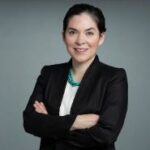 R. Gabriela Barajas-Gonzalez is a developmental psychologist and an assistant professor of Population Health at NYU Grossman School of Medicine. Dr. Barajas-Gonzalez is the principal investigator of a study that examines the impact of immigration-related threat and stress on school communities. She earned a PhD in developmental psychology from Columbia University and hold a BA in human biology from Stanford University. Dr. Barajas-Gonzalez is the daughter of Mexican immigrants and a first gen college student.
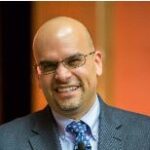 Dr. Parra-Cardona is an Associate Professor in the Steve Hicks School of Social Work (SHSSW) at the University of Texas at Austin. At the SHSSW, he serves as Coordinator for Mexico and Latin American initiatives. He also serves as Area Director for Research at the UT Austin Latino Research Institute. Dr. Parra-Cardona’s program of research is focused on the cultural adaptation of evidence-based parenting interventions for low-income Latinx populations in the US and Latin America.
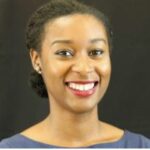 Bianka Reese, PhD, MSPH is a research scientist and program evaluator specializing in adolescent and young adult sexual and reproductive health. Her previous research in the experiences of Latinx LGBTQ+ youth stems from her work as the Research and Evaluation Manager at SHIFT NC (Sexual Initiatives For Teens), where she led largescale evaluations of multilevel, community-based sexual health promotion initiatives and research projects aimed at elevating the voices of diverse youth in North Carolina. Dr. Reese is currently the Senior Research Strategist at Creative Research Solutions, LLC, an award-winning national evaluation, research, and assessment firm.
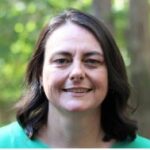 Tania Connaughton-Espino, MPH is an independent researcher focused on adolescent and young adult sexual and reproductive health. Her interest in the experiences of Latinx LGBTQ+ youth stems from her previous work with SHIFT NC (Sexual Initiatives For Teens), where she led the training and evaluation department, conducted capacity-building workshops for youth serving professionals including on the topic of how to be more affirming of LGBTQ youth, and from her extensive experience working with the Latinx population in NC.
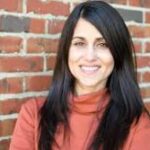 Maru Gonzalez, EdD is an Assistant Professor and Youth Development Specialist in the Department of Agricultural and Human Sciences at North Carolina State University. Her areas of inquiry include youth development with a focus on activism, social justice, and the experiences of LGBTQ+ young people across familial, school, and community contexts.
  Nayeli Y. Chavez-Dueñas, PhD
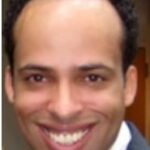 Hector Y. Adames, PsyD