
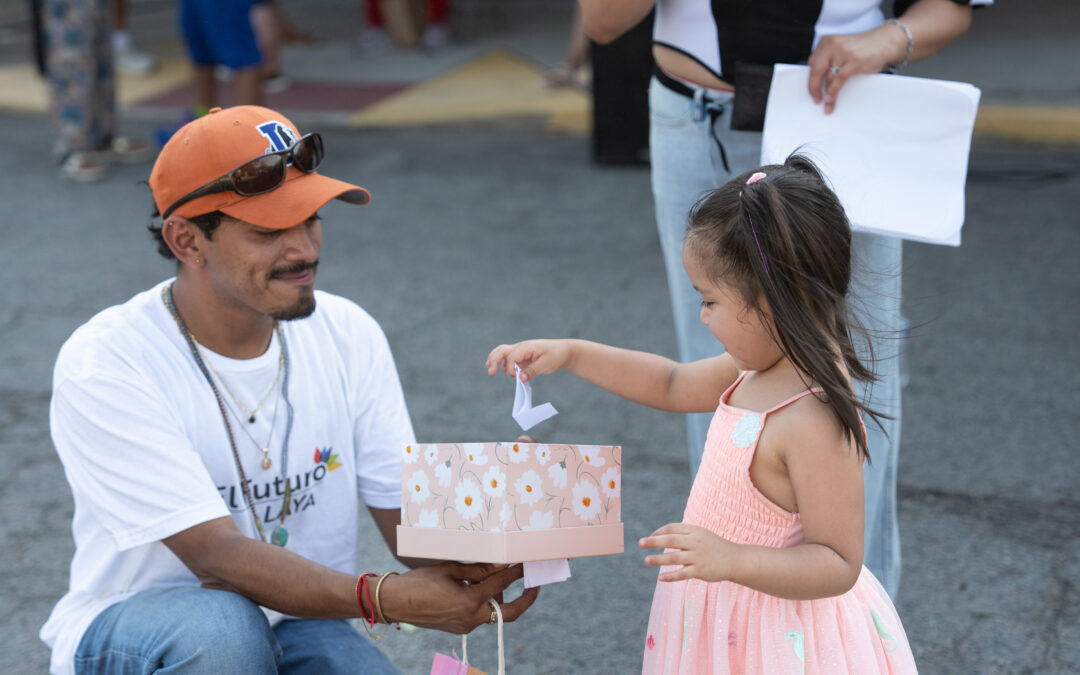
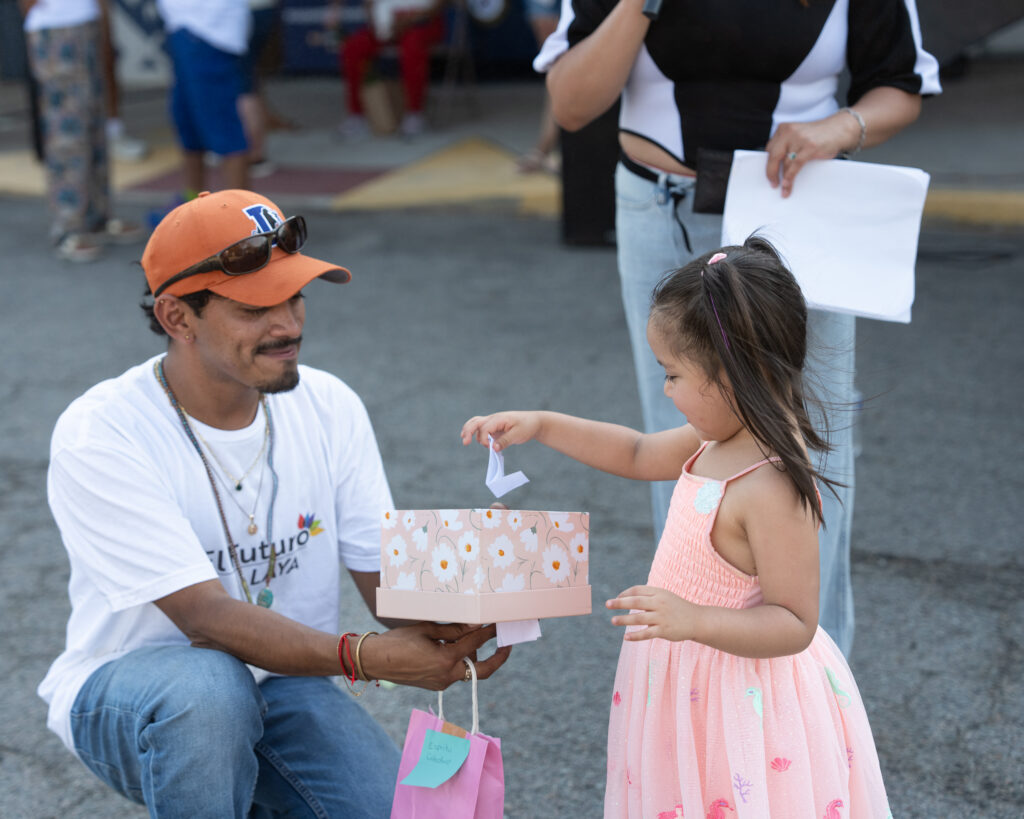
 A reflection from Alexander Sabala, Project Manager for Youth Mental Health and Community Engagement
At El Futuro, our work is rooted in connection, community, and belonging. Few people witness that more closely than Alexander Sabala, our Project Manager for Youth Mental Health and Community Engagement, who helps create spaces where families, neighbors, and community members can come together to learn, celebrate, and support one another.
In this personal reflection, Alex shares what he has experienced during his first months at El Futuro; and how moments of joy, culture, and community continue to shape his work every day…
I have been working at El Futuro for nearly seven months, and in that time, I have connected with so many fabulous individuals. I have shared so much joy, but above all, I have experienced so many beautiful moments. Moments full of laughter, community, and calor humano.
I remember hitting the ground running with Las Posadas and being so nervous about asking the staff for their support just three days after stepping into this position. But thanks to my team, I was able to connect with so many fantastic individuals who helped make Las Posadas an evening filled with love, kindness, and joy.
As time went on and I got to meet more of our staff, I realized that the kindness and empowerment of my team showed me that day weren’t unique to them. I kept witnessing it as I asked for help from all the teams at El Futuro. But there was nothing more beautiful than seeing the communities I love and care about receive the same kindness and empowerment that I did while preparing for Las Posadas.
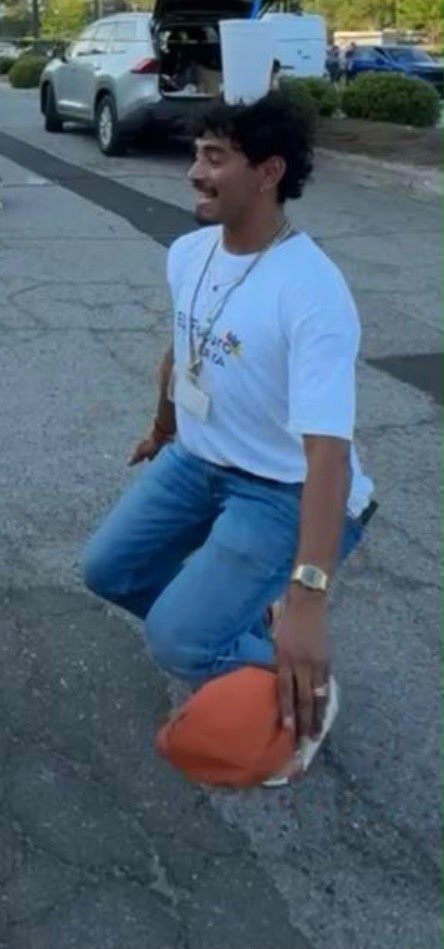
 That evening, we brought a little bit of peace and lots of affection to so many families who were struggling to find it because of everything our communities were facing at that time. I witnessed so many smiles, heard so many giggles, and saw so many individuals become one to the sound of “dale, dale, dale, no pierdas el tino” as I tried not to get hit with the piñata stick.
That night, so many kids left with fun toys, so many families left with a meal to share, and I left with so much happiness that my heart was about to explode.
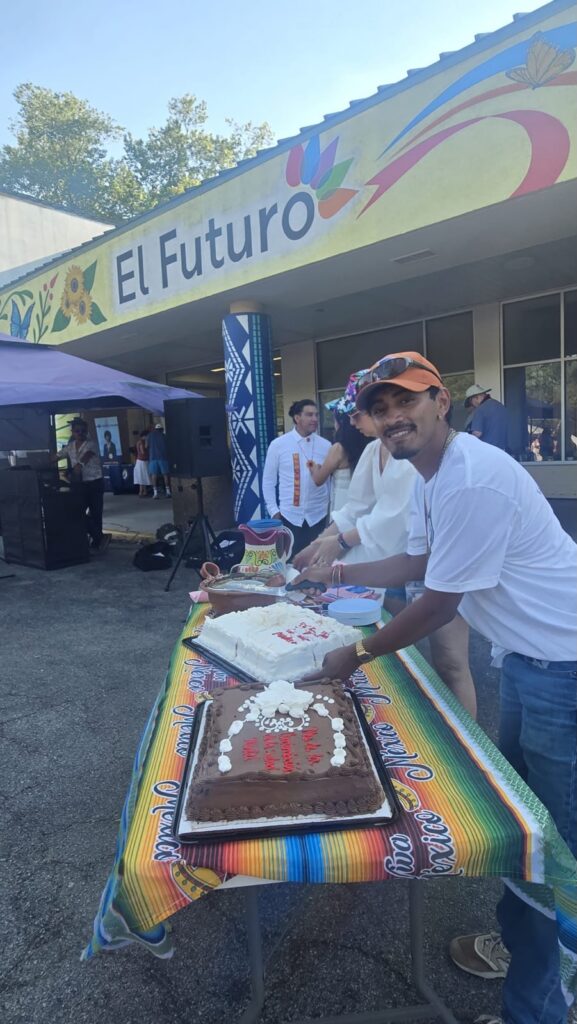
Then came La Kermés, Latino Cultural Festival, where everything I had been witnessing throughout my time at El Futuro became an unforgettable experience. Seeing all the vendors arrive with so much enthusiasm, watching staff and volunteers flood the greenspace with energy like no other; it was out of this world. But what really stuck with me was seeing so many people trickle into El Futuro’s parking lot, saying hello to those they already knew and “nice to meet you” to those they felt a connection with.
At some point, between dancing and making new friends, I forgot I was “working.” And when I snapped back into my role, I realized how magical La Kermés truly is. Its magic lies in its ability to transform culture, music, food, and shared traditions into a powerful sense of belonging, where families reconnect with their roots, celebrate their identity, and strengthen community together.
And we see the power of community in all the work we do at El Futuro.
I will never forget Lucia’s taller de herbolaria (Herbalism workshop). I was excited to learn how to use the nature that surrounds me in a more intentional way, but I was not prepared to learn so much about the power of community. Yes, we learned about plants and the many ways they can impact our daily lives, but what will forever be ingrained in my own day-to-day is how much community matters.
I remember that the last activity of the first workshop was sharing what we hoped to learn or why we wanted to participate. The answers gave the moment an entirely different meaning.
“I want to explore ways to navigate my social anxiety.” “I want to share a moment with individuals like me.” “This is something I’m passionate about.”
 In that moment, I realized this space was more than a plants workshop; it was a space to connect, foster community, and celebrate one’s passions. And Lucia did exactly that. For a few weeks, I watched people make new friends, create lasting memories, and move one step closer to living out their dreams.
Because of that beautiful workshop, Lucia’s incredible way of teaching, and our community’s desire to connect, Tejiendo Conexiones (Weaving Connections) was born. Led by a member of the workshop, the wonderful Edith, this initiative focuses on creating spaces that cultivate connection, uplift one another, and celebrate the power of our shared experiences.
Tejiendo Conexiones (Weaving Connections) has brought so much liveliness to the greenspace, just as Niñitos de la Naturaleza has. These programs have given us mornings where families come together to celebrate the nature that nourishes us, the cultures that make us the colorful humans we are, and the memories we create together.
Those mornings, I felt right back in El Salvador; playing with my cousins and neighbors in the dirt, watching my grandparents laugh as the coffee kept brewing, knowing that a delicious breakfast was in the making.
Those moments, and projects like Las Posadas, Tejiendo Conexiones, and Comunidades Activas, bring joy to my day-to-day at El Futuro. It is a joy that I see reflected in the wonderful team I collaborate with, in my fellow team, and, most importantly, in the communities we care about con todo el corazón.
 Alvely Alcántara, LCSW
 Rossy C. Garcia, MEd
  Katy Sims, MD
  Everardo Aviles, LCSW, LCAS (Eve)
 As a medical anthropologist and social work researcher, Dr. Gulbas’ research embodies interdisciplinarity through the integration of applied theories of health and human development with qualitative and ethnographic methodologies. Her work seeks to understand how people—children, families, and providers—navigate complex sociocultural landscapes in the pursuit of mental health. Most of her work, to date, focuses attention on developing more robust interpretations of suicide risk. With funding from the National Institutes of Mental Health, this body of research has contributed to advancements in theoretical and empirical knowledge of the broader contexts within which youth suicide risk is situated.
  R. Gabriela Barajas-Gonzalez is a developmental psychologist and an assistant professor of Population Health at NYU Grossman School of Medicine. Dr. Barajas-Gonzalez is the principal investigator of a study that examines the impact of immigration-related threat and stress on school communities. She earned a PhD in developmental psychology from Columbia University and hold a BA in human biology from Stanford University. Dr. Barajas-Gonzalez is the daughter of Mexican immigrants and a first gen college student.
 Dr. Parra-Cardona is an Associate Professor in the Steve Hicks School of Social Work (SHSSW) at the University of Texas at Austin. At the SHSSW, he serves as Coordinator for Mexico and Latin American initiatives. He also serves as Area Director for Research at the UT Austin Latino Research Institute. Dr. Parra-Cardona’s program of research is focused on the cultural adaptation of evidence-based parenting interventions for low-income Latinx populations in the US and Latin America.
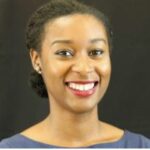 Bianka Reese, PhD, MSPH is a research scientist and program evaluator specializing in adolescent and young adult sexual and reproductive health. Her previous research in the experiences of Latinx LGBTQ+ youth stems from her work as the Research and Evaluation Manager at SHIFT NC (Sexual Initiatives For Teens), where she led largescale evaluations of multilevel, community-based sexual health promotion initiatives and research projects aimed at elevating the voices of diverse youth in North Carolina. Dr. Reese is currently the Senior Research Strategist at Creative Research Solutions, LLC, an award-winning national evaluation, research, and assessment firm.
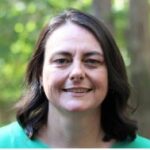 Tania Connaughton-Espino, MPH is an independent researcher focused on adolescent and young adult sexual and reproductive health. Her interest in the experiences of Latinx LGBTQ+ youth stems from her previous work with SHIFT NC (Sexual Initiatives For Teens), where she led the training and evaluation department, conducted capacity-building workshops for youth serving professionals including on the topic of how to be more affirming of LGBTQ youth, and from her extensive experience working with the Latinx population in NC.
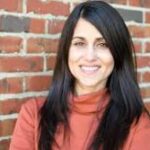 Maru Gonzalez, EdD is an Assistant Professor and Youth Development Specialist in the Department of Agricultural and Human Sciences at North Carolina State University. Her areas of inquiry include youth development with a focus on activism, social justice, and the experiences of LGBTQ+ young people across familial, school, and community contexts.
  Nayeli Y. Chavez-Dueñas, PhD
 Hector Y. Adames, PsyD