
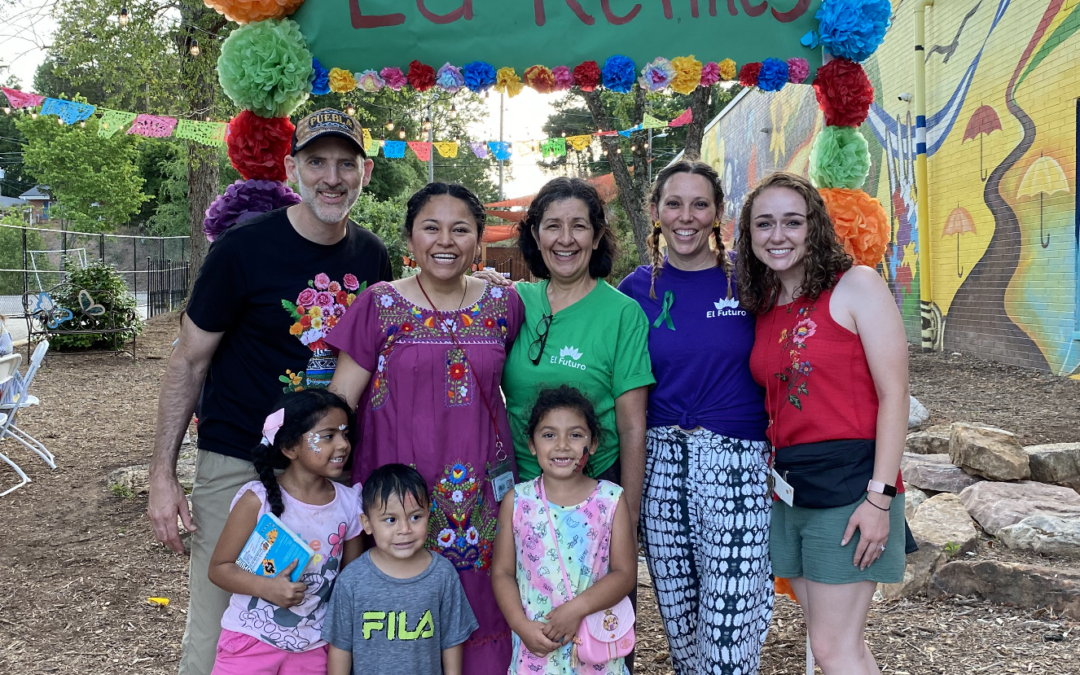
This article was penned by one of our beloved staff members, Mary Jones. Mary is originally from Guanajuato, Mexico but now lives with her bicultural family in the triangle.
When we think of immigrants being alone or unable to be with their family for Christmas, or people who are missing a loved one who passed away recently, we know how hard this is! This year has been tough!
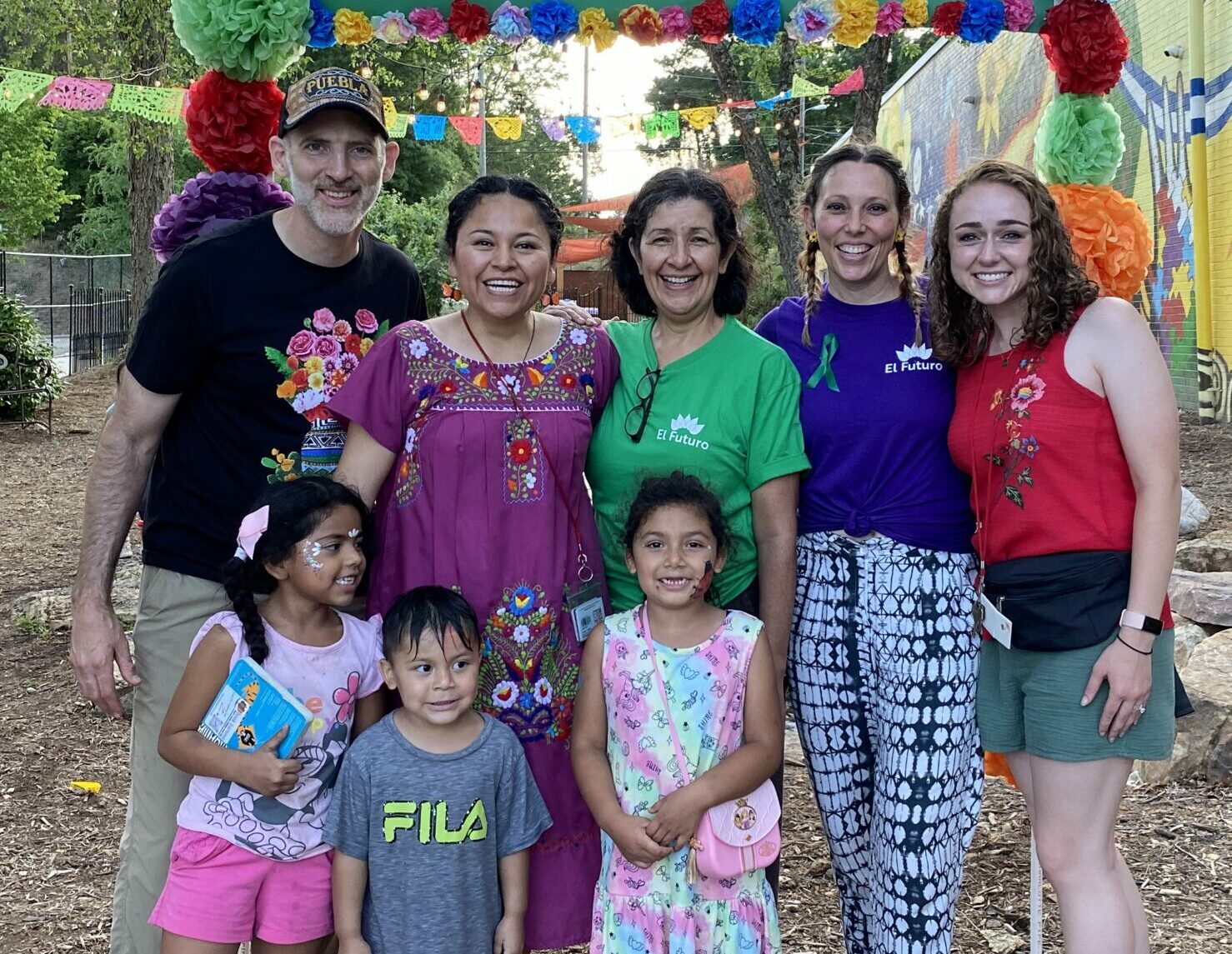 During this time of the year, there is a lot of pressure to be happy, to show off your happiness, your smiles, your Christmas tree surrounded by many presents. We see everyone’s picture all over social media with smiles and happy families having a great time, etc. Also, there is a lot of pressure to give gifts to everyone: your kids’ classmates, their teachers and school staff, co-workers, friends, relatives, your children, your spouse, etc… it can all add up to create a lot of pressure and stress.
But all of that stress is why we often forget the real meaning of this season! In my home where we celebrate Christmas, we try to build awareness around the importance of taking a pause and evaluating our priorities. As parents, we need to ask ourselves what we want to teach our children about the meaning of holidays.
Likewise, I’ve seen how important it is to care for ourselves and others during this season. Here’s some ideas:
Find some comfort in reconnecting to your faith system or deep beliefs. You may find support in other people who feel the same way as you do!
Do your the best to connect with your family – even if they are far away. And take time to honor their memory if they are gone.
Connect with the people you love! There is no better medicine than that! Feel their love across the distance!
Seek out the people who care about you! They may be neighbors, co-workers, friends, or acquaintances who canbrighten your day a little. That is self-care! And self-care is exactly what we all need.
It is important to be intentional about showing kindness to yourself! Amidst all of the distractions, it is important to care for yourself and be very intentional about doing things that you like. We all have a friend who makes us laugh or that is kind to us, an activity or a hobby that makes us feel alive.
And finally, if you live with mental health struggles, it is very important that you continue with your care plan, and that you visualize and have clarity on how you will stay calm and centered through this special season.
 Alvely Alcántara, LCSW
 Rossy C. Garcia, MEd
  Katy Sims, MD
  Everardo Aviles, LCSW, LCAS (Eve)
 As a medical anthropologist and social work researcher, Dr. Gulbas’ research embodies interdisciplinarity through the integration of applied theories of health and human development with qualitative and ethnographic methodologies. Her work seeks to understand how people—children, families, and providers—navigate complex sociocultural landscapes in the pursuit of mental health. Most of her work, to date, focuses attention on developing more robust interpretations of suicide risk. With funding from the National Institutes of Mental Health, this body of research has contributed to advancements in theoretical and empirical knowledge of the broader contexts within which youth suicide risk is situated.
  R. Gabriela Barajas-Gonzalez is a developmental psychologist and an assistant professor of Population Health at NYU Grossman School of Medicine. Dr. Barajas-Gonzalez is the principal investigator of a study that examines the impact of immigration-related threat and stress on school communities. She earned a PhD in developmental psychology from Columbia University and hold a BA in human biology from Stanford University. Dr. Barajas-Gonzalez is the daughter of Mexican immigrants and a first gen college student.
 Dr. Parra-Cardona is an Associate Professor in the Steve Hicks School of Social Work (SHSSW) at the University of Texas at Austin. At the SHSSW, he serves as Coordinator for Mexico and Latin American initiatives. He also serves as Area Director for Research at the UT Austin Latino Research Institute. Dr. Parra-Cardona’s program of research is focused on the cultural adaptation of evidence-based parenting interventions for low-income Latinx populations in the US and Latin America.
 Bianka Reese, PhD, MSPH is a research scientist and program evaluator specializing in adolescent and young adult sexual and reproductive health. Her previous research in the experiences of Latinx LGBTQ+ youth stems from her work as the Research and Evaluation Manager at SHIFT NC (Sexual Initiatives For Teens), where she led largescale evaluations of multilevel, community-based sexual health promotion initiatives and research projects aimed at elevating the voices of diverse youth in North Carolina. Dr. Reese is currently the Senior Research Strategist at Creative Research Solutions, LLC, an award-winning national evaluation, research, and assessment firm.
 Tania Connaughton-Espino, MPH is an independent researcher focused on adolescent and young adult sexual and reproductive health. Her interest in the experiences of Latinx LGBTQ+ youth stems from her previous work with SHIFT NC (Sexual Initiatives For Teens), where she led the training and evaluation department, conducted capacity-building workshops for youth serving professionals including on the topic of how to be more affirming of LGBTQ youth, and from her extensive experience working with the Latinx population in NC.
 Maru Gonzalez, EdD is an Assistant Professor and Youth Development Specialist in the Department of Agricultural and Human Sciences at North Carolina State University. Her areas of inquiry include youth development with a focus on activism, social justice, and the experiences of LGBTQ+ young people across familial, school, and community contexts.
  Nayeli Y. Chavez-Dueñas, PhD
 Hector Y. Adames, PsyD