
A few days ago I read an article in the Los Angeles Times that left me with a heavy – but ever hopeful – heart. The headline was: “Surgeon General warns of emerging youth mental health crisis in a rare public advisory.” Click the link to the article in case you’d like to read it yourself.
One phrase stood out to me:
“Even before the pandemic, children from all backgrounds faced serious mental health challenges…But nearly two years of disruption took a toll and worsened their mental health – especially for groups such as immigrants, students with disabilities and students of color from low-income families.”
In fact, we’re hearing and seeing very similar crises among the youth and families we serve.
| “Me siento impotente en mi casa.” “I feel powerless in my home.” ~Construction worker who returns home late each night and his children won’t talk to him~ |
“Me siento frustrada.” “I feel frustrated.” ~Mother of three who is depressed~ |
“Es como la maestra habla pero no entiendo nada.” “It’s like the teacher is talking but I don’t understand anything.” ~Boy with ADHD~ |
 But here is where I stand with Surgeon General Vivek H. Murthy on hope for the future. He wrote: “Mental health challenges in children, adolescents, and young adults are real, and they are widespread. But most importantly, they are treatable, and often preventable.”
Friends, with your support, we can do more of this treatment and prevention right here at El Futuro, building on what I already see happening every day. Just last week, we finished a five week class for Spanish speaking parents of children with ADHD. As we wrapped up at the end the parents were not only grateful as they talked about what they had learned but also suggested next steps. One suggested forming a WhatsApp group where they could quickly connect about challenges. Another shared an English language resource she had translated to Spanish so that parents could advocate for their children better in the schools. There was hope in the group because of the experience with El Futuro and being empowered to come together as a community and address their kids’ issues as well as head them off before they become problems. Our “treatment” is through a partnership with these parents and with each person who comes to us as we work to find better caminos or paths for the future.
I’m also hopeful because El Futuro is not alone in this work. Our friends at La Semilla, El Vínculo Hispano, LATIN-19, and other community partners are bringing an all-hands-on-deck approach to not just addressing the current crisis, but preventing the tsunami of mental health and other challenges predicted to come over the next decades as a result of the pandemic.
Finally, I am hopeful because I know that you are out there, supporting our work every step of the way. If you are able to give, I hope you’ll consider making a donation today. Donations in all amounts will support our ability to expand our services into a wrap-around, collaborative, and proactive healthcare model that can address today’s crisis while preventing further impacts in the future.
Although this is an unconventional request, I hope you will also consider supporting organizations like La Semilla, El Vínculo Hispano, ISLA, and LATIN-19. They are incredible partners, providing emergency food assistance, COVID-19 information and support, and many other youth and family supports for the Latino familias we serve and the larger Latino community. Together, we can get critical assistance to youth and families who are struggling today, while building a foundation for a healthier and more hopeful tomorrow. See below and enclosed for how you can help.
With thanks and all the brightest holiday wishes,
Luke Smith, MD
Executive Director and Psychiatrist
*Identifying details were changed to protect client privacy.
You still have time to make a donation to our mission
Click below to learn more about our partners or to support their work:

 Alvely Alcántara, LCSW
 Rossy C. Garcia, MEd
  Katy Sims, MD
  Everardo Aviles, LCSW, LCAS (Eve)
 As a medical anthropologist and social work researcher, Dr. Gulbas’ research embodies interdisciplinarity through the integration of applied theories of health and human development with qualitative and ethnographic methodologies. Her work seeks to understand how people—children, families, and providers—navigate complex sociocultural landscapes in the pursuit of mental health. Most of her work, to date, focuses attention on developing more robust interpretations of suicide risk. With funding from the National Institutes of Mental Health, this body of research has contributed to advancements in theoretical and empirical knowledge of the broader contexts within which youth suicide risk is situated.
  R. Gabriela Barajas-Gonzalez is a developmental psychologist and an assistant professor of Population Health at NYU Grossman School of Medicine. Dr. Barajas-Gonzalez is the principal investigator of a study that examines the impact of immigration-related threat and stress on school communities. She earned a PhD in developmental psychology from Columbia University and hold a BA in human biology from Stanford University. Dr. Barajas-Gonzalez is the daughter of Mexican immigrants and a first gen college student.
 Dr. Parra-Cardona is an Associate Professor in the Steve Hicks School of Social Work (SHSSW) at the University of Texas at Austin. At the SHSSW, he serves as Coordinator for Mexico and Latin American initiatives. He also serves as Area Director for Research at the UT Austin Latino Research Institute. Dr. Parra-Cardona’s program of research is focused on the cultural adaptation of evidence-based parenting interventions for low-income Latinx populations in the US and Latin America.
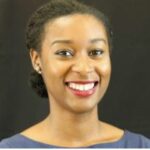 Bianka Reese, PhD, MSPH is a research scientist and program evaluator specializing in adolescent and young adult sexual and reproductive health. Her previous research in the experiences of Latinx LGBTQ+ youth stems from her work as the Research and Evaluation Manager at SHIFT NC (Sexual Initiatives For Teens), where she led largescale evaluations of multilevel, community-based sexual health promotion initiatives and research projects aimed at elevating the voices of diverse youth in North Carolina. Dr. Reese is currently the Senior Research Strategist at Creative Research Solutions, LLC, an award-winning national evaluation, research, and assessment firm.
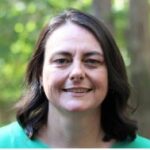 Tania Connaughton-Espino, MPH is an independent researcher focused on adolescent and young adult sexual and reproductive health. Her interest in the experiences of Latinx LGBTQ+ youth stems from her previous work with SHIFT NC (Sexual Initiatives For Teens), where she led the training and evaluation department, conducted capacity-building workshops for youth serving professionals including on the topic of how to be more affirming of LGBTQ youth, and from her extensive experience working with the Latinx population in NC.
 Maru Gonzalez, EdD is an Assistant Professor and Youth Development Specialist in the Department of Agricultural and Human Sciences at North Carolina State University. Her areas of inquiry include youth development with a focus on activism, social justice, and the experiences of LGBTQ+ young people across familial, school, and community contexts.
  Nayeli Y. Chavez-Dueñas, PhD
 Hector Y. Adames, PsyD