
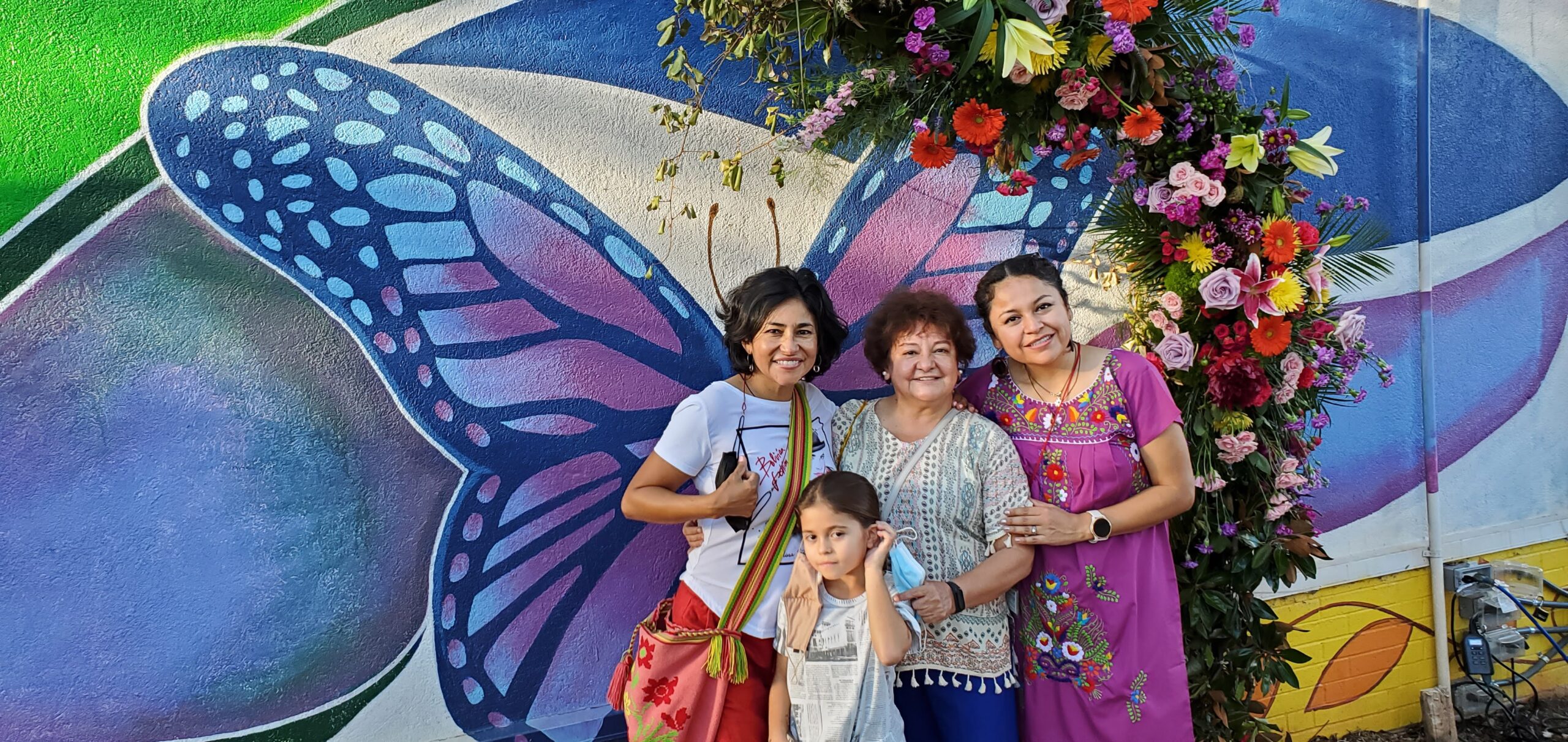
 El Futuro is an organization full of hope.
However, In a time of unprecedented worldwide violence and fear, many of my coworkers here at El Futuro often feel overwhelmed.
This is because much of our work takes place in the long view, and so when we see today’s news about war, violent drug cartels, divisive political rhetoric, dangerous border policies, and so much more, we already feel the weight of tomorrow and the toll this will have on the communities we serve.
Despite it all, we are still here, still listening, and still hopeful! In fact, this 2024, El Futuro will celebrate 20 years of walking alongside our neighbors to nurture stronger familias.
We work with patients to help them rewire the past. Since so many of our patients have agrarian roots, I sometimes think of our work as walking patiently alongside each person as they re-till the fertile fields of their interior life until they feel strong enough to do it on their own.
One of the things that gives me the most hope from these past 20 years is seeing so many familias receive the nurturing from El Futuro, growing in important ways, and then helping others to do the same.
Luis* was a lonely teenager with suicidal thoughts who struggled with his moods. His El Futuro therapist helped him safely navigate the challenging years of high school. And as Luis built more fortitude, he began to include his mother and sister in his sessions so that everyone could benefit from support – support not just for him but for the whole family.
Marcela* was an exhausted mother of a 9-year-old son with undiagnosed ADHD. At El Futuro, her son finally got a clear diagnosis and plan. Through our ADHD support group, Marcela learned behavior modification strategies to help her son. Now Marcela is an El Futuro-trained “Madre Mentora” who is supporting other parents with the same tools that changed her and her son’s life.
Sergio’s* father had been crippled by a lifetime of alcohol problems until he finally found the healing support he needed at El Futuro. Sergio has been so grateful for his father’s new lease on life that he has become a passionate investor in El Futuro’s community programs. In addition to financial support, Sergio donated a go-kart for El Futuro’s drunk driving prevention simulations, and this December, he is hosting a community holiday party with food and gifts for sixty of our patient familias.
As you can see, there are now so many of us walking the fields together to help one another on our paths to healing.
I am writing to you today to thank you for your help! If you are receiving this letter, it is because you have walked alongside us at some point and helped.
And here, at the end of the year, I want to invite you to help some more.
Like Luis. Like Marcela. Like Sergio.
Please consider supporting El Futuro’s work with your generous gift before December 31. There are so many individuals who are seeking our help, and we are committed to being there for each and every one of them.
By contributing to El Futuro, you help us to create community-owned, innovative, and effective responses that address our community’s needs today. Things like our therapeutic garden, summer camps for kids, drunk driving simulations for teenagers, group programs for people who have experienced domestic violence, and so much more.
Thank you for helping El Futuro not only to do the long-view work but also to be a long-view organization!
With thanks and all the brightest holiday wishes,
Luke Smith, MD
Executive Director and Psychiatrist
* Identifying details were changed to protect privacy.
 Alvely Alcántara, LCSW
 Rossy C. Garcia, MEd
  Katy Sims, MD
  Everardo Aviles, LCSW, LCAS (Eve)
 As a medical anthropologist and social work researcher, Dr. Gulbas’ research embodies interdisciplinarity through the integration of applied theories of health and human development with qualitative and ethnographic methodologies. Her work seeks to understand how people—children, families, and providers—navigate complex sociocultural landscapes in the pursuit of mental health. Most of her work, to date, focuses attention on developing more robust interpretations of suicide risk. With funding from the National Institutes of Mental Health, this body of research has contributed to advancements in theoretical and empirical knowledge of the broader contexts within which youth suicide risk is situated.
  R. Gabriela Barajas-Gonzalez is a developmental psychologist and an assistant professor of Population Health at NYU Grossman School of Medicine. Dr. Barajas-Gonzalez is the principal investigator of a study that examines the impact of immigration-related threat and stress on school communities. She earned a PhD in developmental psychology from Columbia University and hold a BA in human biology from Stanford University. Dr. Barajas-Gonzalez is the daughter of Mexican immigrants and a first gen college student.
 Dr. Parra-Cardona is an Associate Professor in the Steve Hicks School of Social Work (SHSSW) at the University of Texas at Austin. At the SHSSW, he serves as Coordinator for Mexico and Latin American initiatives. He also serves as Area Director for Research at the UT Austin Latino Research Institute. Dr. Parra-Cardona’s program of research is focused on the cultural adaptation of evidence-based parenting interventions for low-income Latinx populations in the US and Latin America.
 Bianka Reese, PhD, MSPH is a research scientist and program evaluator specializing in adolescent and young adult sexual and reproductive health. Her previous research in the experiences of Latinx LGBTQ+ youth stems from her work as the Research and Evaluation Manager at SHIFT NC (Sexual Initiatives For Teens), where she led largescale evaluations of multilevel, community-based sexual health promotion initiatives and research projects aimed at elevating the voices of diverse youth in North Carolina. Dr. Reese is currently the Senior Research Strategist at Creative Research Solutions, LLC, an award-winning national evaluation, research, and assessment firm.
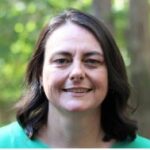 Tania Connaughton-Espino, MPH is an independent researcher focused on adolescent and young adult sexual and reproductive health. Her interest in the experiences of Latinx LGBTQ+ youth stems from her previous work with SHIFT NC (Sexual Initiatives For Teens), where she led the training and evaluation department, conducted capacity-building workshops for youth serving professionals including on the topic of how to be more affirming of LGBTQ youth, and from her extensive experience working with the Latinx population in NC.
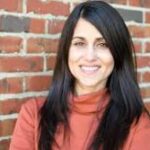 Maru Gonzalez, EdD is an Assistant Professor and Youth Development Specialist in the Department of Agricultural and Human Sciences at North Carolina State University. Her areas of inquiry include youth development with a focus on activism, social justice, and the experiences of LGBTQ+ young people across familial, school, and community contexts.
  Nayeli Y. Chavez-Dueñas, PhD
 Hector Y. Adames, PsyD