
Archived Stories
This End-year give healing and hope to a latino family
Luke Smith could be sitting in a nice office someplace charging a couple hundred dollars an hour as a child psychiatrist. That’s not who he is, though. He’s more of the roll-up-your-sleeves and get-involved type. Smith is the director of El Futuro, a nonprofit clinic...
Mental health during the holidays
This article was penned by one of our beloved staff members, Mary Jones. Mary is originally from Guanajuato, Mexico but now lives with her bicultural family in the triangle.When we think of immigrants being alone or unable to be with their family for Christmas, or...
Make a year-end gift to provide group therapy
“Radical healing is what we are working for.” When I heard my colleague, Mary Pineda-Jones, say this in a recent meeting, I paused. As a psychiatrist, “radical healing” is not a phrase I use lightly, but if you’ve ever witnessed radical healing in a loved one, you...
Serving our Community Health Workers
The COVID-19 pandemic has exacerbated mental health problems in the Latinx community, a community already facing mental health disparities pre-pandemic. Although culturally and linguistically aligned community-based mental health services are available to address...
Results from a night full of EXPRESIONES
It's been two weeks since we came together for our 2022 Fall Fundraiser and Art Auction, “Expresiones,” and we still feel the love and support of all those who joined us. Our hearts are filled with joy and humility for the immense support we received. You helped us to...
Stronger Relationships to Benefit DWI Clients
This Thursday, October 20, we had the opportunity to meet with a group of eight lawyers where we told them how we serve the Latino community, and establish relationships of trust that will benefit our clients, especially those who must solve DWI cases. For this day we...
Hispanic Heritage Kermes this Sunday
Únase a esta fiesta para celebrar la cultura latina en Durham este 25 de septiembre en nuestro espacio verde. Habrá comida típica, juegos, música y mucha diversión... JUNTOS como comunidad. ¡Queremos verte allí! 4-7pm. 2020 Chapel Hill St. Lakewood Plaza. Join this...
Señales tempranas de la depresión
Depresión en adolescentes: señales para tomar en cuenta Durham.- Muchas veces los padres de familia pasan por alto los estados de tristeza o falta de interés de sus hijos adolescentes asumiendo que “es parte de la edad” y lo “solucionan” con regalos. Pero la raíz del...
5 ways to raise mental health awareness
We believe it is important to continue raising awareness about mental health among youth, adults, and families in our community. We have a mission for you: join us and take actions that really make a difference in the society that surrounds each one of us. We...
 Alvely Alcántara, LCSW
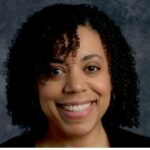 Rossy C. Garcia, MEd
 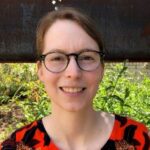 Katy Sims, MD
 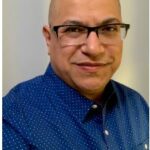 Everardo Aviles, LCSW, LCAS (Eve)
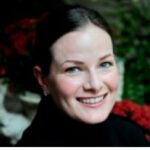 As a medical anthropologist and social work researcher, Dr. Gulbas’ research embodies interdisciplinarity through the integration of applied theories of health and human development with qualitative and ethnographic methodologies. Her work seeks to understand how people—children, families, and providers—navigate complex sociocultural landscapes in the pursuit of mental health. Most of her work, to date, focuses attention on developing more robust interpretations of suicide risk. With funding from the National Institutes of Mental Health, this body of research has contributed to advancements in theoretical and empirical knowledge of the broader contexts within which youth suicide risk is situated.
 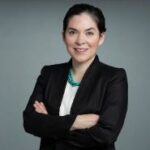 R. Gabriela Barajas-Gonzalez is a developmental psychologist and an assistant professor of Population Health at NYU Grossman School of Medicine. Dr. Barajas-Gonzalez is the principal investigator of a study that examines the impact of immigration-related threat and stress on school communities. She earned a PhD in developmental psychology from Columbia University and hold a BA in human biology from Stanford University. Dr. Barajas-Gonzalez is the daughter of Mexican immigrants and a first gen college student.
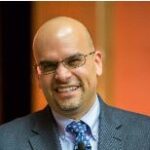 Dr. Parra-Cardona is an Associate Professor in the Steve Hicks School of Social Work (SHSSW) at the University of Texas at Austin. At the SHSSW, he serves as Coordinator for Mexico and Latin American initiatives. He also serves as Area Director for Research at the UT Austin Latino Research Institute. Dr. Parra-Cardona’s program of research is focused on the cultural adaptation of evidence-based parenting interventions for low-income Latinx populations in the US and Latin America.
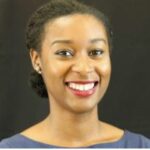 Bianka Reese, PhD, MSPH is a research scientist and program evaluator specializing in adolescent and young adult sexual and reproductive health. Her previous research in the experiences of Latinx LGBTQ+ youth stems from her work as the Research and Evaluation Manager at SHIFT NC (Sexual Initiatives For Teens), where she led largescale evaluations of multilevel, community-based sexual health promotion initiatives and research projects aimed at elevating the voices of diverse youth in North Carolina. Dr. Reese is currently the Senior Research Strategist at Creative Research Solutions, LLC, an award-winning national evaluation, research, and assessment firm.
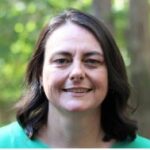 Tania Connaughton-Espino, MPH is an independent researcher focused on adolescent and young adult sexual and reproductive health. Her interest in the experiences of Latinx LGBTQ+ youth stems from her previous work with SHIFT NC (Sexual Initiatives For Teens), where she led the training and evaluation department, conducted capacity-building workshops for youth serving professionals including on the topic of how to be more affirming of LGBTQ youth, and from her extensive experience working with the Latinx population in NC.
 Maru Gonzalez, EdD is an Assistant Professor and Youth Development Specialist in the Department of Agricultural and Human Sciences at North Carolina State University. Her areas of inquiry include youth development with a focus on activism, social justice, and the experiences of LGBTQ+ young people across familial, school, and community contexts.
  Nayeli Y. Chavez-Dueñas, PhD
 Hector Y. Adames, PsyD